OUR LIFE IN 3D

The Home of Daddy's Day Dare! ~ I am just trying to stay above water

Archive for the category “Tight-Wad Tuesdays”

Tight-Wad Tuesdays: Aim for a Soft Landing

My wife is addicted to the extravagant Housewives franchise on reality TV. Last night there was a season ender with a wedding in Beverly Hills (Housewives of Beverly Hills). Love ‘em or hate ‘em, it was clear this housewife loved her daughter and put out an incredible event for her daughter’s wedding.

Beverly Hills wedding

It left me with the thought, wouldn’t we all like to do that for our kids that we love on their special day. I turned to my wife, breaking the encouraged silence, “I better start saving now for our girls”. Their big day may be only 20 years away. How else can I afford the rose petaled chandeliers, 100 of our closest friends, parking for said friends, the $9000 wedding cake and so on? My wife gave me a confirming nod.

Now that I have the job again, its fun to do all the fun financial planning. The first thing we talked about was where we are going on our next vacation, followed by a new deck for our backyard, funding the kids educational 529’s and our retirement DRIPs. It feels good to get back in the drivers seat!

If you are young and reading this you may think all that is a lot to pay for with a weekly paycheck. If you are older you know how it all somehow falls into place. Planning the short term stuff is fun and easy. It’s the long term commitments that are more challenging and may get brushed aside.

As a financial adviser I can tell you most people think their 401k’s will fuel their retirement. That’s the easy way for planning and wrong on so many levels. First there is the thing called Enron. Those employees lost their entire 401k savings from the wrecking of a company.

Bye-bye Enron!

Second, how long are you going to live in retirement? People are living longer every year. Plus, in today’s standard of living, people actually think they are going to retire early, adding more need for a hefty safety net..

Third, what are things going to cost when you are ready to retire? What did cars, or a loaf of bread, cost 20 years ago? What will it cost in 20 more years?

These are just a few signs that tell you 401k’s are not the sole answer to living a lifestyle you worked so hard to build over your first 60+ years. I don’t know about you, but I want my savings to last a long time, going down slow like a parachute instead of plummeting like the speeding impulse of the bungee jumper.

So wouldn’t you want to retire a millionaire? A million dollars won’t even be that much in 20 more years. We better get started!

I told you an easy, painless, carefree, so-simple-you-won’t-even-know-it way to build for a comfortable nest egg when you are through with work. I showed you the things to look for when investing in great companies, such as generous dividends and a good dividend yield. I also showed you some of the cream-of-the-crop, as far as dividend paying, reinvesting companies. So now I want to show you exactly how to do this.

First, your homework. I showed you a sorry graph on dividend paying companies last week; companies we all know and love. Otherwise great investments, right? But the last two were not so. Why?

We are planning for the future, right? We want to be sure whatever companies we invest in will not only be around but going strong in the future; a good 20 – 30 years from now… at least.
Phillip Morris (PM) is doing better than ever right now. Its stock price has hit record highs this year. Its dividend paid is far superior to most companies. What’s the problem?

You know how Phillip Morris makes the bulk of its money, right? Cigarettes. Each year the government is making it harder and harder to stay in business via levying taxes. Its industry is under constant attack from legal issues and people wanting millions of dollars in law suits because cigarette companies lie in their advertisements. And lifestyle changes! I am not so sure this company will be around in 20 years, or at least doing the level of sales as it enjoys today. I don’t think buying this company would be so smart for over the long haul. McDonalds and hamburgers yes. Cigarettes, no.

Eastman Kodak. Did everyone’s family have a Kodak camera at one point? Pictures printed on Kodak paper? Everybody had these! The graph I left tells the story of Eastman Kodak. They have fallen all the way down to a Penny Stock. Quite coincidently, Kodak filed for bankruptcy the day after I posted my blog last week. Why?
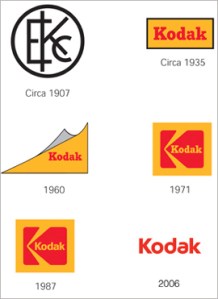
Their business was making and printing pictures…the old fashioned way. Kodak cameras and Kodak paper. Today everything is digital. The cameras are and the pictures sit in our computers; not so much on glossy paper. Kodak stuck to its guns and did not adapt, or tried way to late. They were a great investment years ago, paying a hefty dividend them self. But now they are filing for bankruptcy.

The lesson to learn is, when picking a company for the long-term, pick a staple that everyone will want and need in the future. Staples like healthcare, food, household items, hospitals and so on. Don’t pick todays hot company or latest trend. The world is changing at a rapid pace. And nobody wants cameras with rolls of film that need to be shipped away before you can see them anymore.

HOW TO START YOUR OWN DRIP:

1) Pick some companies you know and love. This way, if the way the company’s business changes, or would no longer be in style, you will know when it happens. These companies are not hard to find. You buy them every day stores.

2) Research the company’s dividend. How much is it? Is it fair in relationship to the price of the stock ? (dividend yield) Don’t sweat this! You can find this number on any computer’s homepage under ‘Finance’, then ‘Price Quote‘ and then ‘Fundamentals’. Try this now with Coke (KO).  Dividend yield is on the first page under ‘Quote’. The actual dividend paid is on the next page, or ‘Fundamentals’ and it took you less than 60 seconds to find this out. And 2 minutes to write down the information you want.

3) Research your preferred companies Dividend Reinvestment Plan. You may find this under the company’s web site; under ‘Investors’. You may also find the info at a Transfer Agent’s web site, like Computerhare. Take an evening after work to compare the specifics and what you are looking for in a plan. This is the bulk of the investment of your time in DRIPs,  so take your time. The things you want are under last weeks blog (little to no fees, automatic bank drafts, possibility of making larger cash payments).

4) Buy your first shares! To buy your first shares you may have to go to a bank this one time and ask to speak to a professional adviser. They need to purchase your first shares for you. Sometime stocks want as much / little as a $500 investment; or only one share. Just ask first. Some transfer agents let you buy your first shares directly from them. (Lots easier! ~ bookmark this page) Your research in the various plans will tell you this.

5) Get the shares in YOUR name. If there is any tricky part, it is here. When you go to your professional you must ask / insist the shares be put under your name. All trading houses buy shares for you but they hold the title to them until you are ready to buy or sell again. Ask for the stock to be put in your name! The adviser will comply. Go with your spouse or a friend to the bank just to hold the adviser to it.

6) Set up your DRIP with the Transfer Agent. If you buy the shares under your name the company will send you these shares ( I think they look so cool). They will also send you literature about their Dividend Reinvestment Plan and how to set it up with their preferred agent.  Contact the agent to set up your Golden Parachute account! They will need a bank deposit ticket for the automatic bank drafts funding your retirement package.

That’s how it is done! There is nothing tricky are too hard that your education has not brought you to. There is no need to be an expert, a doctor, adviser, lawyer, or anything. These plans are set up for the common person. (Look at me! ~ I’m so common)

If you want some additional info on setting up a DRIP accurately here is a link and here. Take some minutes or read this info and be comfortable with the process. The entire process may take up to 2 months to complete. Nothing will sneak by you. Now, have a party! You just bought your first company! At your age! (Your family will be so proud)

Finally, daydream about where you want to spend your life when you are tired of working, the car you will drive, the vacations you take, the foods you eat. You just funded that comfortable landing in your retirement. Great job! Your soft landing has just been put on auto-pilot from here.

Home Sweet Home!

~ If you have any questions about anything I have gone over the last 3 Tuesdays, don’t be a Tight-Wad,please ask me and I will do my best to help:  Mccleafhome(at)comcast(dot)net

Lets Buy a Company Today!

You know, there’s never one around when you need them! I have an important appointment to day and all my tried and true sitters are out of commission! I called and called and called. No use! What to do? Do I  miss the meeting? Finally, at the midnight hour, another angel came through! Phew! It kinda makes me want to buy a company so I have a ‘go-to’ list when I need one!

Last Tuesday I talked about how we all can retire millionaires through the buy-and-hold, investing-on-a-shoestring, carefree and painless investing strategy of Dividend Reinvestment Plans. I talked about what they are and some of their advantages. But I know ths is scarey stuff to some people that are new to investing. “Am I doing this right?” “What if I pick the wrong company?” And so on.

Today I want to help you pick a great company or two to buy for your retirement by giving you a few criteria to look for and some good examples. First understand not all great companies pay dividends to shareholders. Many tech driven companies on the NASDAQ are such companies. In the ever evolving tech world, some great tech companies would rather reinvest their profits into their Research and Development instead of rewarding their shareholders. Thats OK.

An example is Apple, Inc. (AAPL). Apple is one of the most sought after companies today. Their stock’s price is over $400 per share. Few people would argue their edge in Iphones, Ipods, and other great toys would put them ahead of their competition without reinvesting in their great ideas, thus leading the charge instead of following it. Yet Apple doesn’t pay out one penny in dividends to their shareholders. Based on Apple’s cool stock performance not many are complaining either.

Dividend paying companies are super cool for their own reasons though. The Motley Fools point out, “dividend-paying stocks historically outperform non-payers over the long term. According to Ned Davis Research, publicly traded companies paying a dividend returned 10.1% compared with just 4.1% for non-dividend companies between 1972 and 2006.What’s more, during periods when the market declined between 1970 and 2000, dividend stocks outperformed non-dividend-paying stocks by a 1.5% margin every month.” Why? Because dividend paying stocks have part of their performance built in in the form of dividends.

Investing in DriPs, we reinvest those dividends, year after year to let our savings snowball into owning a share of the comapany’s empire. So how can we know which companies to DRIP with? Let’s take a look:

WHAT TO LOOK FOR:

The prime indicator in finding a great company, paying a sizable return, big enough that you want to retire with, is the measure called ‘Dividend Yield’. Simply, this number is a measure of the dividend paid to shareholders compared to the stock’s selling price. A good paying company has a dividend yield of at least 2%, meaning it is paying you back 2% of your stock’s purchase price; every 3 months. This ratio is not a stationary number. Understand, since this is a working ratio (dividend / stock price) as the stock’s price goes up the yield goes down. As the stock drops, the yield goes up. Simple math.  We’re looking for yields of at least 2% so don’t let the math concern you ~ its actually done for you at most financial web sites. Just believe the Dividend Yield is an ‘indicator’ of a company that pays a significant dividend.

PICK A WINNER ~ THE BASICS:

First, So you know what to look for in a DRIP company you want to own, now what? Here we go back to good investing basics, “find a company that you know, you know how they make money, and you know will be around for at least as long as you are. ~ for better or worse, we want to grow old with this company!

Second, you find a few companies that meet your criteria so far, before you say, “I do” take a look at their DRIP plans to be sure they have all the features we want, as some do not. You can find the specifics for DRIP companies at their transfer agent sites, like Computershare. The checklist of features we want our DRIPS to have include:
•    little to no fees for purchase and reinvestment. To me a $2 fee is OK for a $50 transaction. It is a lot better than brokerage firm commissions.
•    be sure the DRIP can make automated bank drafts. We want this long term investing to be easy and painless. There is nothing easier than an automated bank draft that we only have to confirm, but not be a party to its occurrence. ~easy-peasy!
•    be sure it has a feature for optional cash payments. We do this if we get a big tax return some time, or take advantage of a price while it is low to buy more shares, etc. Its just a nice feature to have.

Does this seem easy enough yet? Are you a little uneasy about researching great companies and picking the right one(s)? Let me do some of the homework for you! The following is a list of some of my favorite great companies to purchase for DRIP investing. ~sorry about the table, WordPress seemed to eat it, how embarrasing..
Company    Symbol    Price (1/16)    Dividend    Div. Yield
McDonalds    MCD             $100.35            $2.80            2.79%
Proctor & Gamble  PG    $65.81               $2.10             3.19%
Merck              MRK              $38.32                $1.68            4.35%
3M                     MMM             $83.60               $2.20            2.63%
Walmart        WMT              $59.54               $1.46             2.45%
Coke                     KO               $66.99               $1.88             2.81%
Intel                INTC               $25.14               $0.84             3.34%
Johnson & Johnson JNJ  $65.26          $2.28             3.49%
Phillip Morris PM              $77.32             $3.08             5.70%
Eastman Kodak  EK            $0.52                    0                     0%

So what do you think? Which companies would you like to buy right now? Why?

Some more tidbits about this list to consider:

McDonalds is entering into China for increased sale PLUS McDonald’s operational performance is top notch. That’s why it’s been able to pay and increase dividends for decades. The restaurant titan just upped its dividend, making for an annual $2.80 per share — or 2.9% — more than triple the amount it paid out five years ago. (it actually increases its dividend paid!)

Procter & Gamble has raised its dividend each year for the past 50 years. More importantly, it boasts a strong stable of products that people use and rely on. That doesn’t mean you can blindly buy and forget about it, but you don’t necessarily have to keep an eye on it as much as you might with less established companies.

Merck:  An aging population will need more health care, which supports not only obvious picks like high-yielding dividends but increasing sales (demand) as well.

Johnson & Johnson: see Merck and Proctor and Gamble above        .

3M: has a 52 year history of raising its dividend EVERY year.

Coke, Walmart and Intel speak for them self as far as brand recognition and staying power.

I think this discussion has you thinking a little bit about smart investing and logical thought processes based on your own business education. So I want to leave you with why investing in the last two companies would NOT be good ideas ~ the one speaks for itself. I’ll get back to these ideas next Monday on considering owning companies for the long, long term.

As always, if you have any questions or comments please ask or email me. I want to help you retire with a million almost as much as you do!

Tight-Wad Tuesdays: We can all be Millionaires!

So you know, Mom loved the Sonic Blast, I do not bring home rich desserts that often for her, especially on a gym day (it was more of a reward) and Dylan and Skylar are ready to move on to Lesson II in ‘Baby Can Read’ already. So all the girls in my home are happy…today!

So I wanted to ask you, are you ready to learn how to become a millionaire for your retirement?

We all have been educated in different areas. While I love to learn more about some things I feel pretty secure on some areas of my education. One area is Personal Finance. I want to tell you of an easy, safe, and virtually painless method to accumulate wealth over time.

Wait! Don’t go! This is my soapbox moment; something I feel strongly about. I am not making any money off of this. You are! I just want to tell you how. It is so easy. You don’t need to be wealthy or have a six figure income. Ideally this type of investing is best for young adults; singles in their 20’s, young married couples with little debt, or 30ish professionals looking to map out their future and so on. We did not start until I was in my 40’s.

This type of building wealth, with little money to start, is called “Dividend Reinvestment Plans” or DRiPs for short. They are so simple. They should be taught in our schools, but they are not. You don’t hear about them because the big boys (banks and investment firms) don’t make any money from them.
WHAT: In a nutshell DRIP investing is owning a few shares of a great company that pays a regular quarterly dividend. Ideally the dividend is generous in relation to the stock price (dividend yield, I talk more about this later). You own the share of stock and make regular monthly purchases, like $50, every month to buy more shares of that stock. So you slowly accumulate more shares over time. The dividends, paid quarterly, are not taken as cash but instead are reinvested as more shares of stock.

Now you know, the more shares of stock you own, the higher your quarterly dividend payout ($ dividend amount  x   # shares of stock owned = dividend payout). So the paid dividend is reinvested and grows larger each time, building more and more shares. Simple, right? Kind of a snowball effect!

The stock shares do accumulate slowly over time (drips) with small regular monthly purchases. You might only receive $10 or $15 in dividend in new shares at first (still beats what interest you would get in a bank’s savings account). In a few years you have accumulated more shares and now that dividend looks more like $40 or $50.

You keep making regular monthly purchases and reinvesting your dividends over time and you can grow to hundreds and then thousands of shares (if you start early enough). Now how much would 1000 shares of Coke be worth at retirement? If Coke paid $1.00 per share dividend and you owned 1000 shares, how much would that dividend pay out be? How many more shares of stock would that buy? Plus you get a progressively larger pay out every 3 months! And its even better than that!
HOW:  The slow and steady accumulation of shares and wealth is only one aspect of this. The ‘wealth’ is the CHEESE. The plans method is its simplicity. Can you spare $50 a month? Pack your lunch twice a week? Once you build this into your family budget it is painless. If you, or your spouse,  gets a new job or a raise consider picking up a second DRIP.

We did this. We started off with two DRIPS and since have picked up a few more for a broader exposure. Can you imagine slowly building 1000+ shares in 5 or more great companies? That is our goal. You don’t need a large sum of money to start, just a little bit of room in your budget. It is investing on a shoestring and retiring with the whole shoe store! And as simple as a monthly transfer to your savings.

 
I will give some specifics next week on the way to start DRIP accounts and help you pick some great Dividend paying companies the following week in Tight Wad Tuesdays. I just want you to understand what DRIPS are and how they work. Simply, you buy a few shares of stock, put them in your name, and have a Transfer Agent, like Computershare, take care of the regular monthly purchases for you, usually automatic bank drafts. You get a statement at the end of the month saying the amount of the purchase and your accumulated shares.

Now if you are not a little bit excited about this either I am not doing my job right or you are not concerned about a comfy retirement. So I want to offer some ideas from the Fools,

The Lowdown
…Drip plans constitute the closest thing to getting your shares “straight from the tap.”

“… plans are designed to allow investors to begin investing relatively small initial sums. You then have the option to amass a more significant position over time via low- or no-cost optional cash payments, which can typically be made monthly or as often as you can afford.”
So you buy shares, regularly over time, paying little to no commissions on each monthly purchase. Again, the CHEESE, is building wealth over the reinvestment of dividends…. in addition to the ‘Dollar-Cost Averaging’ idea and ‘Compounded Annual Growth’. Consider why reinvesting dividends rocks

“One of the best things about Drips is that they allow you to have all dividends reinvested back into company stock, even if the dividends just buy fractions of shares.

Consider Ford Motor Co. (NYSE: F  ) . If you bought some shares of it at the end of 1980 and hung on for 18 years to the end of 1998, they would have appreciated nearly 3,900% (22.7% annually). That’s amazing enough. But get this — if you’d been reinvesting dividends to purchase more shares, your total return would skyrocket to 12,300%, or 30.7% per year! An initial $1,000 investment would have grown to $39,000 without reinvesting dividends and $124,000 with reinvested dividends.

  • Over the same 18-year period, Pfizer advanced 22.3% annually without reinvestment and 25.3% with it.
  • J.P. Morgan shares grew 12.3% without reinvestment and 17% with.
  • Coca-Cola (NYSE: KO  ) appreciated 24% without reinvestment and 27% with it. 

Over a decade or two, these differences can amount to doubling your money.”

Those returns were after 18 years of investing and reinvesting. If you start when you are 30 the timeline expands to more than 30 years, and can practically double the returns listed above. Coke has actually returned over 55% for me since 2004. That is 8 years of reinvestment growth over some very turbulent times in the markets. And now those reinvested dividends are actually larger than my monthly contributions. And growing!

So get started early, be patient, watch the account grow!
I think I have taken up enough of your time for now. If you have any questions at all please contact me via the email on my gravatar. We do own a small handful of DRIPS, so I know the process. I want to end with a summary of the DRIP advantages: Thanks for stopping by! Your future is worth your investment…..

ADVANTAGES of DRIPs

1) You don’t need to be rich!:You don’t need a large amount of money to start. Usually owning one share is all that is required to enroll in a DRP.
2) Significant accumulation over time: DRPs are a cost-effective way to put stock dividends to better use — purchasing more shares of the company — than simply spending the money or having it sit in a money market account. Over a long-term horizon the paid dividends can grow exponentially!
3) Investing on a budget: Most companies allow investors to purchase additional shares through a Dividend Reinvestment Plan for nominal fees — or often no fee at all. These stock purchase provisions, allow an investor to send in as little as $10 to $50 at a time to purchase additional stock.
4) NO Commission investing!: About 100 companies have DRPs that allow investors to purchase stock at a discount to the current market price. These discounts can range anywhere from one to ten percent…with little to NO commissions!
5) Virtually ‘Painless’ building of wealth: DRPs “force” investors to buy stock on a regular basis and hold on to that stock (dollar-cost averaging). As a result, investors adopt a long-term horizon and often invest small amounts of money on a regular basis — money that they usually don’t even miss.
6) Comfortable Cash-Flow in retirement: When you reach your retirement age the accumulated piles of stock could amount to a significant cash flow if you decide to stop reinvesting the dividends and take the quarterly payout instead. ~ but please don’t do this before retirement!

7) Stock Slumps are OK: When the price of your stock goes down it is actually OK..you are buying MORE shares then. More shares = more accumulated shares for reinvested dividend shares!

Like all important financial decisions you should do a fair amount of research first.  I will leave a few links to further define and illustrate the Dividend Reinvestment Plan; in addition to the links in my post. See you next week!

Drip Investing, Step By Step

What are Dividend Reinvestment Plans (DRPs)?


Tight-Wad Tuesdays – Go Team Go!

Yesterday our team did not make out so good. ..not so good at all. But that didn’t stop our girls from capturing a little bit of team spirit! ~ OK, they were highly encouraged by some of us here in the ‘spirit department’. They did their part to cheer our team!


Similar to the hopes of our team going unfulfilled are the chances the dreams for our daughters may not get fulfilled either. As much as we wish and plan, possibly these girls may not get Cheerleader scholarships to a good school! ~ It is such a cut throat activity some times.


So we have to be prepared to fulfill our scholastic dreams for these girls some other way.

Which brings as to today’s discussion. So far I have told you how to send your kids to college for FREE! I talked about the reasons to start investing in their college educations as early as possible, and why when the markets go bad it isn’t necessarily a bad thing. Next was a discussion for picking some truly noteworthy investments, proven over time to be winners, to help grow these kid’s educational funds to their full potential. But what if you get to this point and you have too many choices? Or hope to pick a winning fund over a sinking fund in the same asset class. What then? We want the best for our kids, right?

If you get to this point it is easy to over or under analyze. Analysis paralysis! Don’t get paralyzed by alternatives (my wife often says about me). Lets not make it too hard at this point. Here are two basic tips on mutual funds to help narrow in on the best of the best; or the best from the worst.

First, in picking a mutual fund in a certain asset category, go for the stars! Morningstar publications rate almost all mutual funds, giving them a 1 to 5 star ranking; just like restaurants. We eat in the best restaurants, right? You can usually find a Morningstar ranking by doing a search with the funds symbols or it should be included in your plan’s literature as well. So look for a mutual fund with the most stars! Ideally we want to pick a mutual fund with at least a 4 or a 5 star ranking.

Don’t get obsessed with the star ranking though. The ranking of the mutual fund actually tells us how well it accomplishes its goals, not the best in growth. For instance, a 5-star fund does exactly what it sets out to do. A 3-star fund doesn’t do it so much. That’s why we pick the studs with the most stars.

But that doesn’t mean a 5-star Bond fund will outperform a 3-star Large-cap Growth fund. It just means that bond fund does a better job at doing what it says it will do. Wouldn’t it be great if kids could earn stars this way?

So pick a fund with the most stars within your target asset class.

Second, what if you find 2 or 3 4-star funds in the same asset class in which to chose? What now? One easy statistic that ties indirectly to your funds growth is the fund’s fees. Fees are usually listed towards the bottom of the fund’s literature. Look for these. In general we want to pick a fund that carries the lowest fees. Never pick a fund with fees that are larger than 1% . Now that may seem like a small amount to spend, 1%, but remember that fee is coming off your earnings. So, if your fund grows 10% one year (that would be nice), after fees it only grew 9% at a 1% cost. On the other hand, if your fund LOST 3% one year, after fees taken out you have now lost 4%. Yikes! So pick the funds with the lowest fees.

One statistic associated with Fees or Cost is the ‘Turnover Ratio”. Turnover ratio has to do with how much trading the fund managers do in order to get you great returns. Just like if you did it yourself, the more the fund trades (buys and sells) the more commissions it has to pay and so the higher are over all costs that we just talked about. So a lower Turnover Ratio is a good key to identifying lower costs.

So, in summary, to make it easy in choosing Mutual Funds, find the 4 asset classes we talked about last week. Then find a great mutual fund in each one of those asset classes. To help us decide which funds are the best we want to pick the one with the most Stars and also one with the lowest costs (fees). Make sense?

Next week, I want to make all of you Millionaires, especially if you are under 30 and have some patience to invest. Its easy! ~ you’ll thank me later!

But for now I have to attend a party! Dylan has been putting together a tea party for Skylar all morning and I have to go. It gets really ugly if I show up late to these things!

PS: I have covered a lot over the last 4 weeks in TWT. If you have any questions at all on the topics or ideas I have discussed please email me via the gravatar and I would be glad to clarify things for you. Slainte!

Tight-Wad Wednesdays – Picking a Winner

I know what you are thinking. You are looking for an image of some toddler with her finger up her nose. It was tempting! While the opportunities do present them self, I did not want to teach my girls to go for gold whenever a camera was presented. How could we live that down?

I hope to make this quick today as I have a need to get to the gym. We have a reservoir  of cookies, brownies, chocolate,my favorite chips (that do not have a Frito Lay logo on them!) and ice cream left over. Then my brother arrives last night with two more containers of cookies. OMG! You have to try them all! Their has to be a simpler solution!

So far on Tight-Wad Wednesdays we have talked about how you can send your prodigy to college for FREE. We also discussed the importance and benefits of starting early and making consistent, steady investments over time. Today I would like to offer some tips on how to pick some winning investments to grow your 529 plan over time.

First, I have to mention, these are some easy, non-time consuming tips. They are by far not the only method for picking winners. If you have a reliable, non-greedy Financial Advisor that has you in a 529 plan already, they would be an excellent resource as well. ~they don’t need to make $ off your kid’s college fund though!

Second, these tips are for someone investing over a long-term, meaning 10 years or more. Things happen in the stock market that make for 2 or 3 years down turns in the market (or longer). If the need to access your college saving plan is under 10 years a more conservative plan may be in order.

Going back to the playground days, when it was time to pick my team in soccer or football, I chose the best, the fastest, the strongest, the ones that had history performing their best to help MY team win. Because I like to win. I want to win when it comes to setting up my stock portfolios as well. Here are a list of the winners:

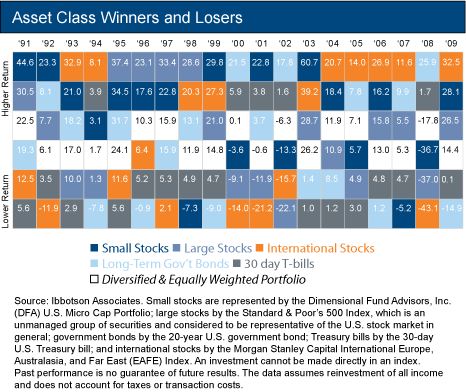
The grid and colors above represents the performance of different asset classes over time, from the top performers each year to the worst. You know which ones I want, right? The most consistent winners each year.

Look across the top line. They are the top performing asset classes each year. These are the classes you look for in picking mutual funds in your 529 portfolio. You, want the best of the best, right? You want the studs! What are the colors that stand out to you and their associated class?

Small Stocks, Large Stocks, and International Stocks. Better defined for mutual funds these are: the Small-cap or small company funds, Large-cap or large companies, and International funds, investing in great international companies. These are the monsters you want working for you!

For some clarity, Small cap stocks are small companies with new, great ideas. In a normal economy the sky is the limit as far as their growth. International funds are funds with great companies across the globe. (although less great today) The world is full of great companies, outside the US. You should be apart of their growth, right? The Large cap sign in this example is misleading as Large caps usually fall into 2 or more classes. The best two are Large-cap Value (Huge companies that are currently under priced) and Large Cap Growth (The 800 pound gorillas with more resources than their competition).

So pick a winning team! It would be smart to allocate funds equally to Small Cap stocks, Large Cap Stocks, and International funds. A little more diversification, while still having all the winners on your team would be using the two different US Large Cap segments, Value and Growth.

I also weight the Small Cap and International a tad heavier in my portfolio since there are two purchases in US Large Cap. It may look something like this: 30% Sm. Cap., Lg. Cap-Value = 20%, Lg. Cap Growth = 20%, and International or Global funds at 30%. To me choosing anything other than these proven winners over time is like picking and ‘average team’. Who wants to do average with your investments?

So you see what you want in your portfolio? You want to win and your kids should go to a great school because you want the best for them. You naturally want the most assets available in your 529 plan  (and less out of your retirement savings). You go to pick a great performing mutual fund in your preferred asset class and you see your 529 has 3-5 funds to choose from its asset class. Now what? How can you pick the best from the best? How can you tell a Dog from a Star?

I’ll try to make some sense of that next week in Tight-Wad. …because I have inhaled my daily ration of cookies during this post. I need to get to the gym! If only my family knew the only thing that my girls need to eat is a few tasty flavors of lip gloss! I could still get these pants snapped then!

Post Navigation