Friday, a week ago, my tour and transportation business was hanging onto the hope of big business like a cat on a Roomba! It was Friday, right before a long weekend. I checked the weather to see what to expect. Thursday had been lovely, but Friday? Well, apparently it was set to rain, with forecasts calling for rain and stating: “it may be heavy at times.”
So, not knowing what to expect, business wise, I packed my umbrella, some chilled bottles of water, a big smile, and some business fliers to handout to resorts if I wasn’t busy (again).
I dropped our convertible off at the airport early that morning. It was being rented for the weekend. It started to rain and quickly became a very busy electrical storm. We are used to a lot of rain in Charleston, but by the time I got up enough courage to leave the airport and drive downtown to work, the airport was underwater.
I took my time driving downtown, some parts of the highway were worse than others. Southerners may not be very good at driving in the snow but they won’t win any awards for driving in the rain either!
I finally arrived downtown and exhaled that I was finally out of the downpour on the highway. I headed down Meeting Street and it wasn’t long before I was making and driving through waves. Our downtown was underwater in less than 2 hours.
Calling for rain this Friday
It may be heavy at times
Build the Ark
I kept driving (enter your comments on my smartness in the comments) thinking there would be a lot of people needing rides! I knew, from experience, where the low-lying places in town are. If I haven’t told you yet, parts of Charleston are actually below sea level. In those areas, the runoff has nowhere to go. Yeah, “a little rain might be hard at times.” It was a lingering tropical storm minus the wind.
Sadly, we will get flooding like this several times a year. People that live here have been through the drill. If you noticed, there were not too many cars on the side of the road. People that live here know all our parking garages open to the public downtown during a storm.
However, like I mentioned earlier, not all of us know how to drive in a storm. Here is an Uber driver that took a right turn and drove down a boat ramp on the Isle of Palms (marketing hint for Historic Tours and Transportation…I’ve never done that!).
Some people say thats proof that God loves me. I said I know. He’s saving me for something special!
It has been a long time coming, but its arrived. I am an owner now! I work for myself. Accordingly I have my own blog. A website. We have our own Instagram, Facebook, and YouTube page also. We are taking reservations! Then you can rate us here.
Charleston has a new alternative for personal transportation and private tours. We are taking groups of up to 6 people on tours, the airport, to the beach, where ever you want to go. Ride in comfort and stress free, unlike other ride share choices.
Welcome to Charleston Historic Tours and Transportation, your trusted alternative for exploring Charleston in comfort and style. Whether you’re visiting the Holy City for the first time or returning to experience its charm again, we offer premium private tours and transportation services designed to make every moment easy and care-free.From historic sightseeing adventures to scheduled airport transfers, our goal is simple: to provide personalized, luxury transportation, a casual atmosphere, all with Southern hospitality at its best.We go beyond basic transportation. Here’s what sets us apart:
Personalized Experiences: Every tour and trip is tailored to your schedule and interests.
Luxury Comfort: Travel in an air-conditioned SUV with comfortable seating and cold bottled water.
Local Knowledge: Gain insider tips and historical insights from a Charleston local who knows the city inside and out.
Reliability: Count on us for punctual, professional service every time.
Our mission is to make every guest feel like a VIP—because to us, you are.
So come on! Let us take you for a ride around Charleston! We are your personal guides!
Last year we stumbled upon the local Museum Mile pass for our downtown, where, for a flat fee, you buy one ticket then get to visit all the museums and museum houses in our historic downtown.
We visited the Gibbes Museum of Art first this year.
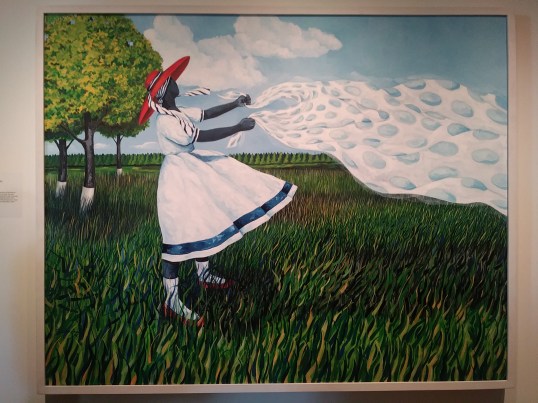
Corene, 1955 By Jonathon Green
When you think of art, what do you think of?
Certainly there are numerous types of art.
Wiki says ART “is a diverse range of human activities in creating visual, auditory or performing artifacts, expressing the author’s imaginative, conceptual ideas, or technical skill intended to be appreciated for their beauty and power.
Phew!
I always understood ART as anything that makes you think.
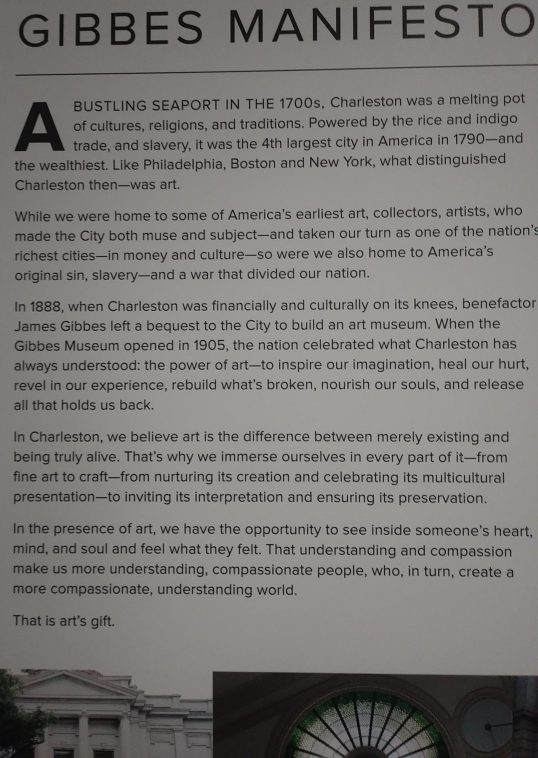
To the Gibbes Museum of Art, they sum it up in their Manifesto:
“..the difference between merely existing and being truly alive.”
I think they copied that from my Ourlifein3d Manifesto!
When we entered the Museum we noticed most of the displays were the same as they were last year.
I hoped for newer!
But Art is what you make it and, as Museums go, we set out to learn new things.
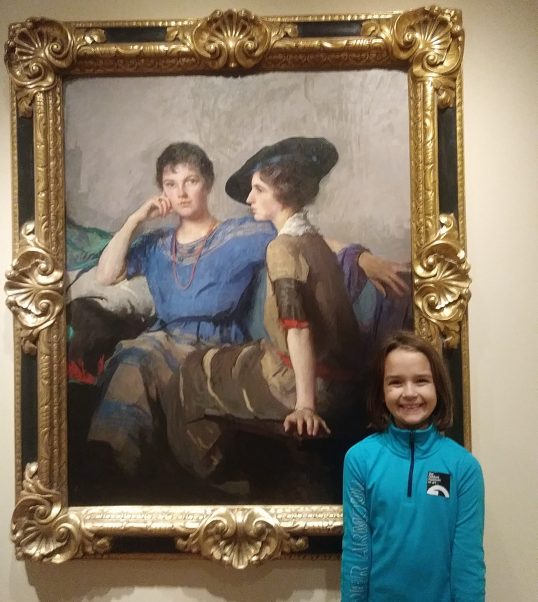
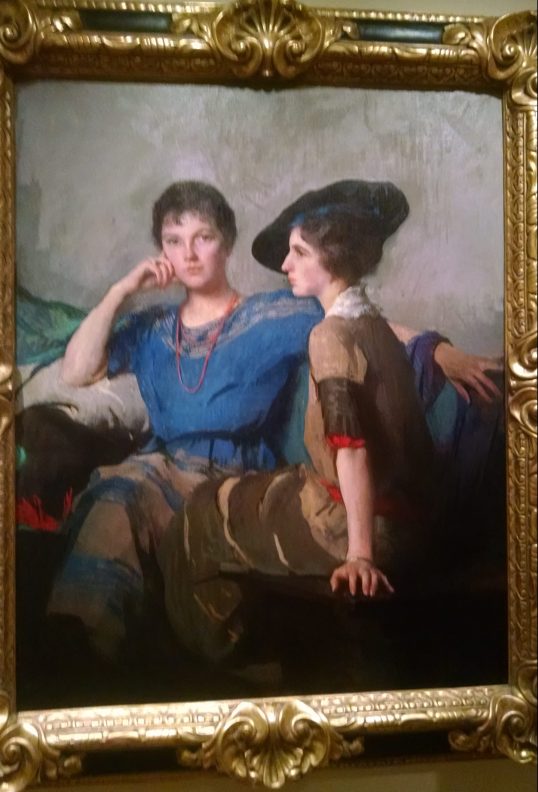
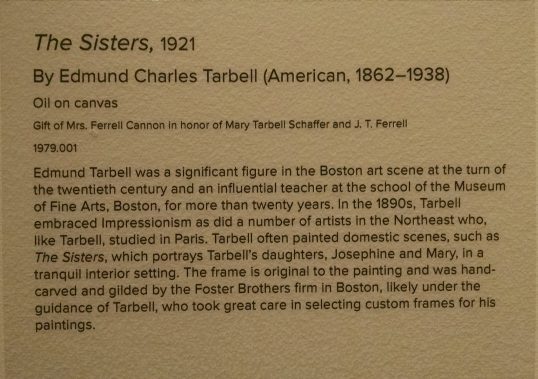
First off were the ‘Sisters’.
I call this picture ‘Dylan and Skylar’.
As each of my two ‘sisters’ were humoring their old man and didn’t want to be there either, similar to the sisters in the painting who were being painted by their artist father.
Exhibit number two of what I learned…
Before the roughly 1920-1930 Little Boys were dressed like little Girls in our country and abroad.
In the picture below the caption read the child was the ‘lone son’ of this famous French Commander in our country.
Well the person behind D is dressed like a girl.
I learned in another museum today that around the age of 7 or 8 boys started wearing trousers. Then they were to be treated as an adult (to be seen in pants); not a child any longer.
The quote went on to say how adult women ‘were still treated with the same class as children and hence kept wearing dresses’.
Hmmmm…
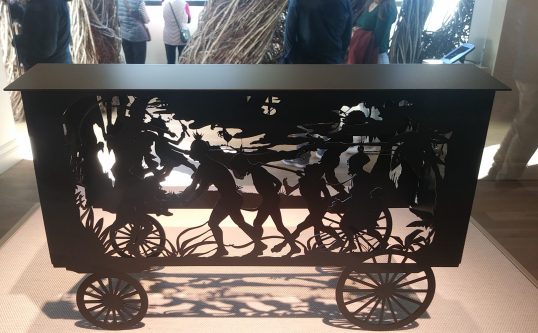
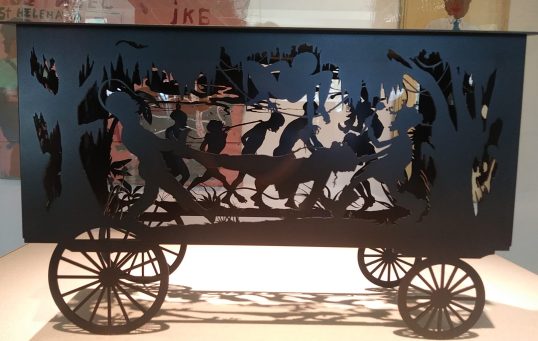
Another interesting piece was this little metal carriage that was cut designed with a laser.
Notice the characters. What do you see or make you think of?
This piece was trying to depict a slave’s suffering in the early part of our country.
First, note in the second picture, a demon of sorts up in the tree reaching down to pull out the young dying slave’s heart.
Second, I want to apologize to everyone and especially the Southern Sea Muse. She is a great photographer and scraps her pics if the horizon in the picture is not level ( I read).
I take these pics with my phone. I try to level them off but not one of them you will see today will be level.
Sorry SSM! I will never live up to your standards.
(She’s a bit of a Grammar Nazi too I understand)
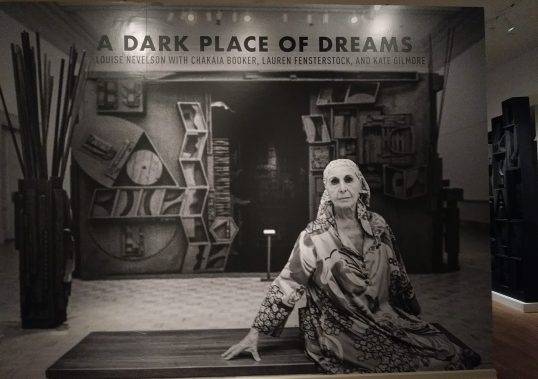
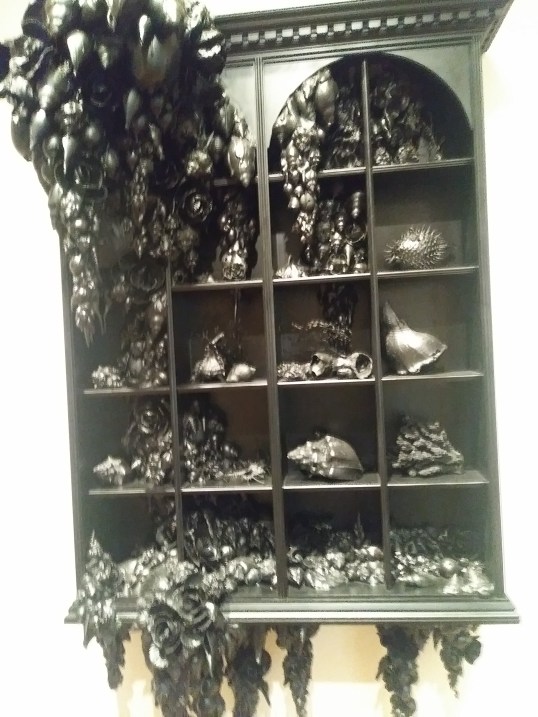
The smaller third floor had new exhibits. The Noir floor….
‘A Dark Place Of Dreams‘
Here were several exhibits in black (the land of dreams) and how artists made shapes and things come alive. The various artists are in print under the title on the photo
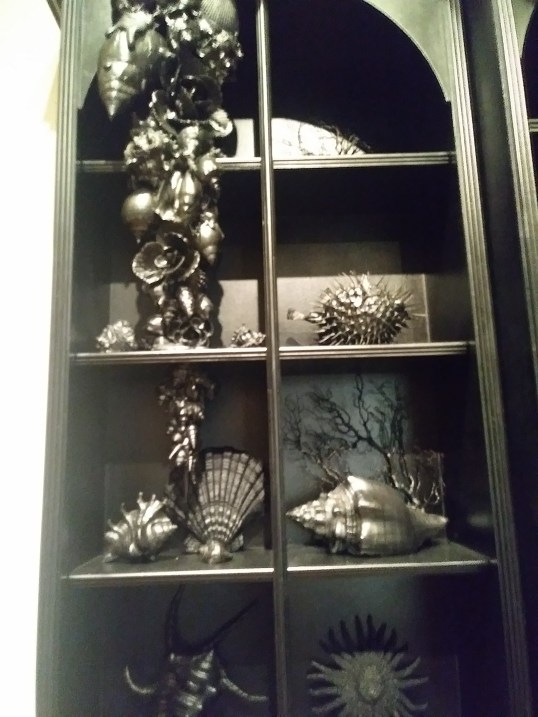
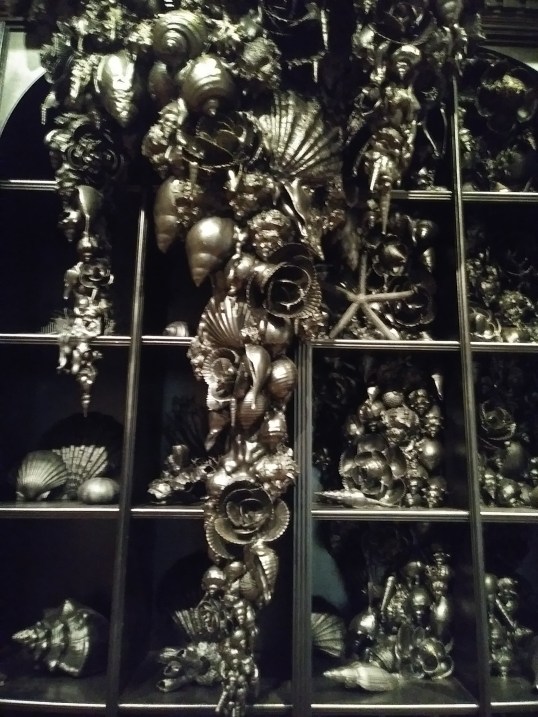
The first thing that spoke to me were the huge sea shell displays. Real sea shells, they were mounted and painted black.
At first I thought it a bit eerie, but after looking at it for a while it did take on a dream like quality.
Or I was getting tired…..
See if you can blow it up or at least find the detail of all the types of sea shells (and Puffers) in these…
They are all real! (and not riding a Horizontal plane)
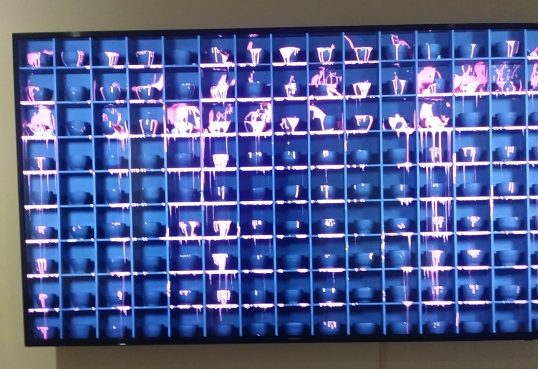
Now, keeping with this ‘black box’ theme was this:
Rock, Hard Place, 2012 by Kate Gilmore
..still leaning,
This type of art was not much to look at ….
You had to ‘watch it’!
Have you seen this type of art before?
I hadn’t.
and to speed you to the Big conclusion, this …
WTF?
The exhibit is called, Rock, Hard Place. And the young artist is just throwing rocks into small clay pots with paint in them.
My kids have been doing that since they were four!
Still, if you stood there, and watched the cascading waterfalls, steadily drop paint on the ground (you can see the artist is trying to keep from slipping) it can mesmerize you a little.
….or I was just tired.
The turn of the corner into the next room was a room full of trash.
..made to look like art.
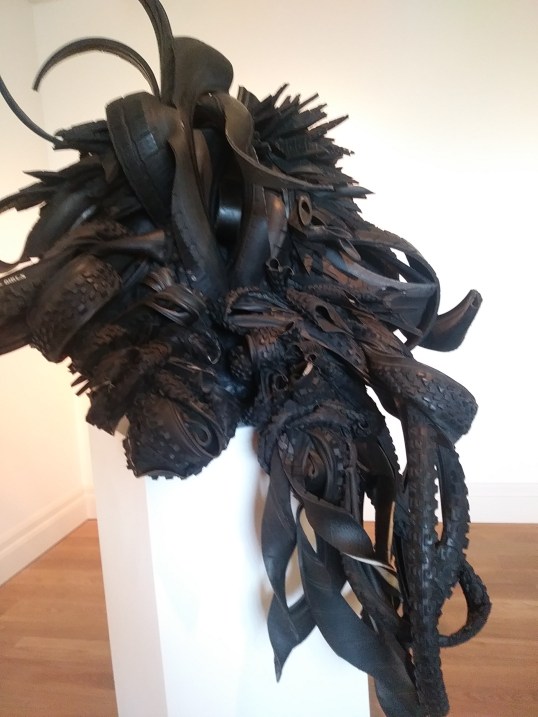
The first artist illustrated was Chakaia Booker,
….’an American artist that is known for her environmental sculpture work that addresses the struggles and victories in human aspirations and involvement. Her work involves transforming found objects (old tires) into expressive art that tackles social and cultural issues as well as femininity.‘ (wikipedia)
I just saw something made with lots of carved scraps of old tires!
There was a lot of detail in the scraps of shaved old tires. They were still all rubber!
The exhibit reminded me of something a new blogger I follow would appreciate, Harleyte.
She is a one-of-a-kind young lady in France that rides motorcycles and kinda reminds me of a female James Dean…in France. She added her own unique touches to Christmas thisyear.
She’s cool like that.
I mean, James Dean would like this, right?
So If art makes you think…
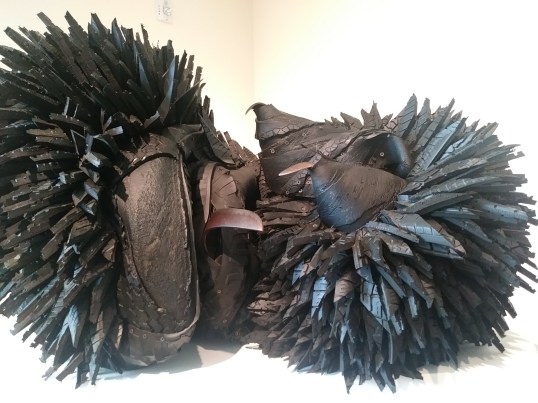
What do you see in this next picture by Ms. Booker
Hedge Hogs, right?
No?
What did you see?
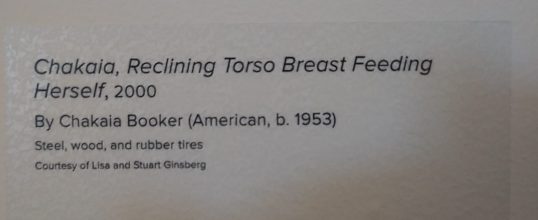
Well, If I told you what it was depicting you might think I was making it up. So here is the placard describing this piece of art by Chakaia:
Did you see that?
I did Not see that! Hmmm…well maybe…
So one final piece in this trash room.
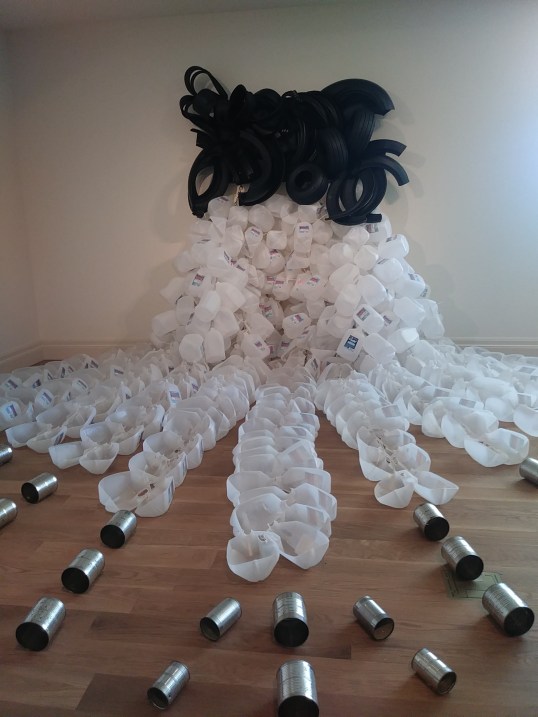
It is called “OVER, the rainbow”.
Please take a look. I invite you in the comments below to tell me what you see or what you think the author is trying to say …
OVER, the rainbow
Yes, that is an exhibit with old rubber tires on the top flowing into empty gallon water jugs ( I must still have Chakaia’s last display in my mind), flowing into gallons water jugs cut in half, flowing into tin cans.
What does it mean?
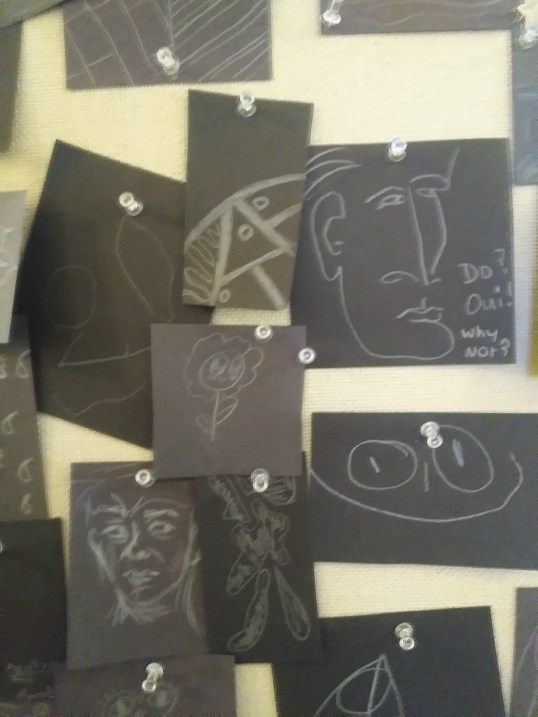
Well, as a proud parent I have to tell you my very own Skylar got something she drew hung in the Gibbes Museum as well!
(we are soo proud of her!)
Skye drew that beautiful flower right there in the middle!
My artist in the making!
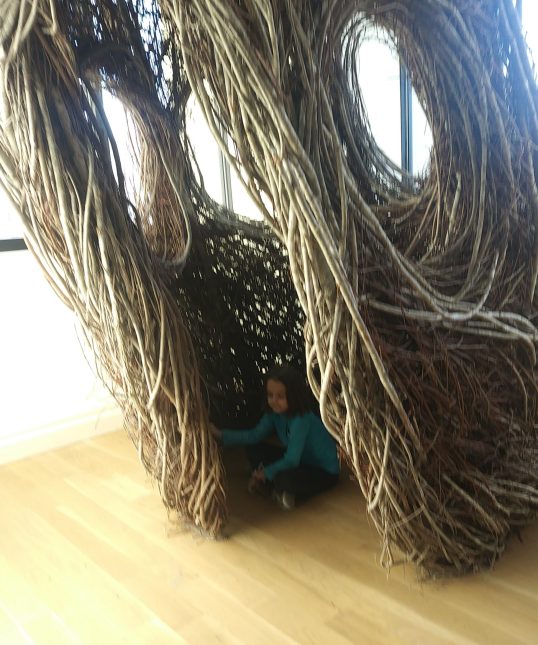
Get out of there Skylar!
But art is not restricted to a museum, oui?
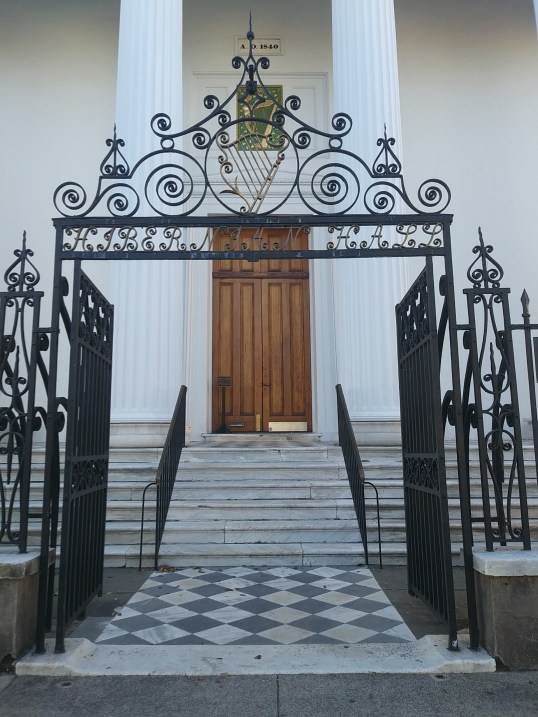
As we left the Gibbes Museum right next door was the old Huguenots Building and with it its fine metal art work.
What do you think?
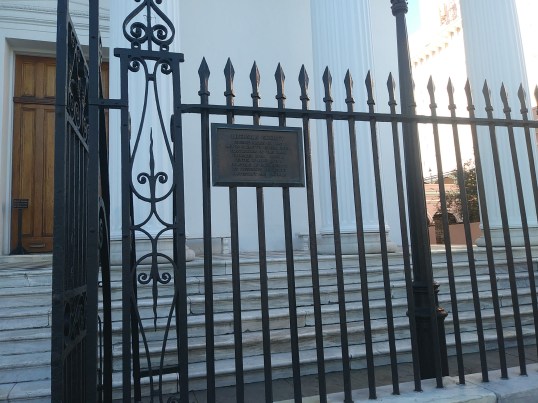
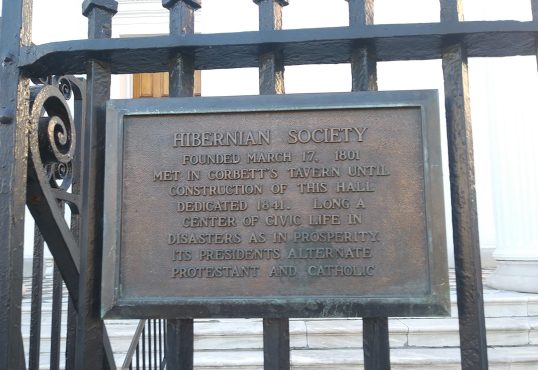
Huguenots were typically French Protestants who fled to this country to escape religious persecution. Although clearly, the green sign above the church door and the metal harp over the entrance suggest these people were from Ireland.
But wait, when in doubt, what does the sign say?
Use your context clues..
That would be a rough crowd!
Can you imagine that back in that day?
Catholics and Protestants meeting…… in a bar?
Hmmm?
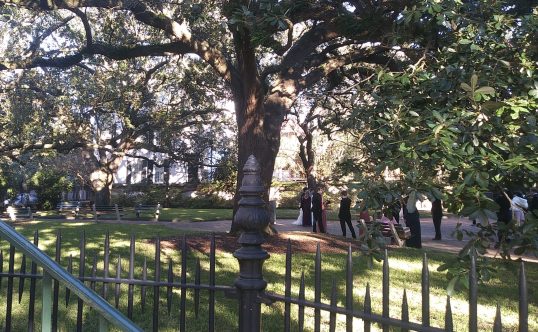
It was a great day here in Charleston this weekend and across the street from the Gibbes Museum this pretty scene was going on.
They picked a
Great day!
Oh to be married in Charleston!
Things could be worse!
Thanks for reading on through all this knuckleheads!
So we have this Museum Mile pass that I told you about last week and it is week two for acting a like a tourist in our hometown.
Last weekend we visited the Charleston Museum and then the museum houses of the Joseph Manigault house, the Heyward Washington house (yes, that Washington) and the Aiken Rhet or Gov. William Aiken house. And all within walking distance of each other.
So, for those about to tour / endure some old museum houses, we salute you!
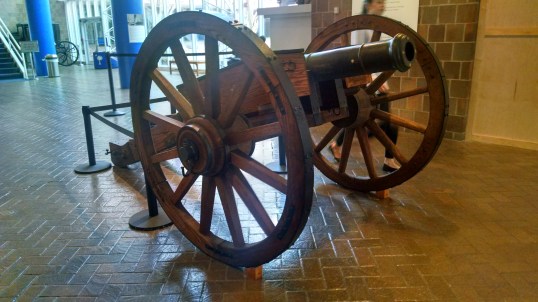
Revolutionary War cannon guarding the Charleston Museum
The Charleston Museum was OK, great if you enjoy reading about history, wars fought, and the evolution of Charleston, entitled Becoming Americans. But the Natural History portion was smallish and not a lot of truly unique things to see.
We stayed there 3 hours.
There was a mummy and some old coffins from Egypt that stood out to me but that is about it.
The first two houses we toured we were not allowed to use our cameras, lucky for you and your post downloads. So I have some copied pics from their website, unless they are from outside.
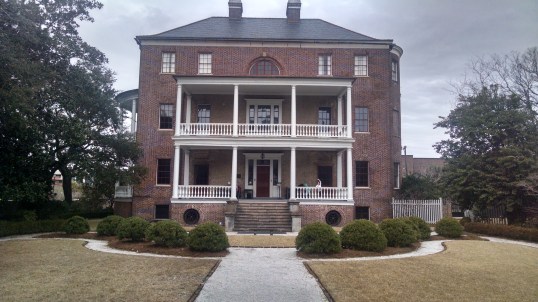
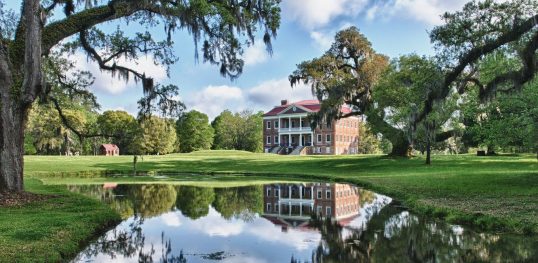
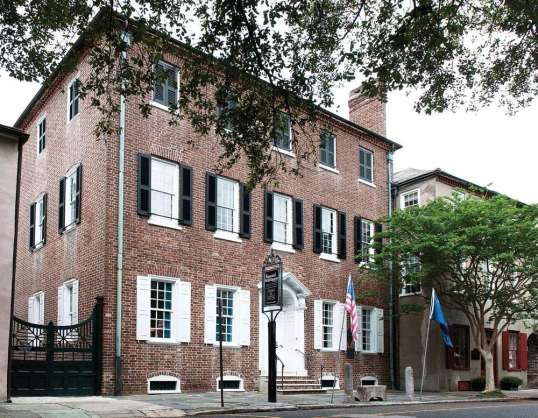
One of Charleston’s most exquisite antebellum structures, the Joseph Manigault House, built in 1803, reflects the urban lifestyle of a wealthy, rice-planting family and the enslaved African Americans who lived there.
Joseph Manigault was the brother to the man in the final painting in my previous post, Charles Manigault, the grandsons of the ultra wealthy, Peter Manigault. The house was also designed by his brother Gabriel, a ‘Gentleman Architect.
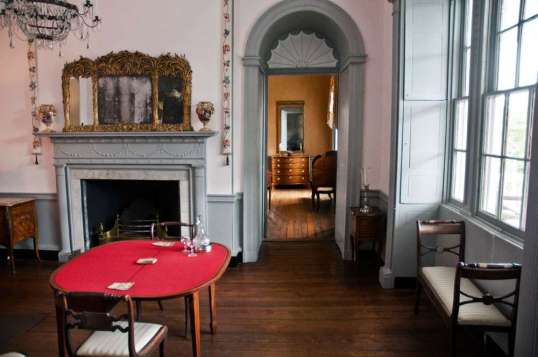
This house, and other Neoclassical houses of the time, were known for their ‘balance’. One side of the wall mirrored the other. If a door was on the right then a door was on the left, even if it did not open. As you go down through these pictures you can plainly see the dedication put into there balance.
See the balance on the outside of the house. The left is exactly the same as the right.
And so it went inside.
Still listing to the right a little
Descending from French Huguenots who fled religious persecution in Europe in the late 1600s, the Manigaults prospered as rice planters and merchants during the 18th century and became one of South Carolina’s leading families.
The house above was termed a summer house (they did not live here all year round) but in truth it was a winter house as the Manigaults inhabited the house during the winter months that were actually known as Charleston’s ‘social season‘. It’s just too hot in the summer here, to get dressed up not to mention too many smells.
The city of Charleston at this time was actually a walled city. A wall was built around Charleston to protect it from pirates, the Spanish, and the French in the 1700’s and early 1800’s. This house was actually on the outside of the wall. So they liked to be called ‘in the country’.
It’s too much to go into but you can imagine how many smells are contained in the walled city, or outside for that matter. Start with the horses in the streets, throw in no running water, livestock slaughtered on one’s property, maintaining livestock from horses, cows and chickens on many properties and so on. This is why most houses had dining rooms, bedrooms and rooms for entertaining on the second floors.
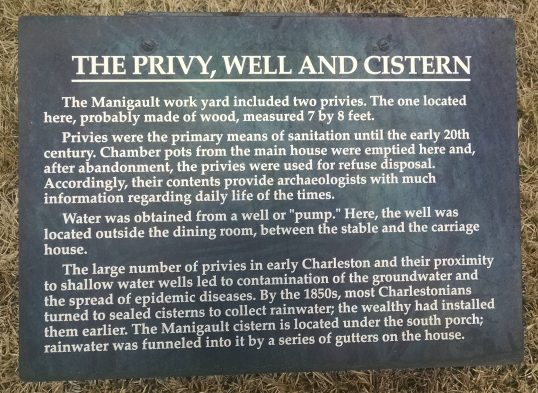
Affluent houses such as these had water management system, usually consisting of a well but later developing into a ‘cistern’ due to the well water getting contaminated.
Water management in colonial life
Such was life in the 1700s and early 1800’s
Joseph Manigault inherited several rice plantations and over two hundred slaves from his grandfather in 1788, and also married (very) well.
Arthur Middleton, father of his first wife, Maria Henrietta Middleton, was a signer of the Declaration of Independence. Following Henrietta’s death, he married Charlotte Drayton, with whom he had eight children.
If you ever visit Charleston two very well-known plantations to visit are the Middleton Place (Henrietta Middleton)
and Drayton Hall (Charlotte Drayton).
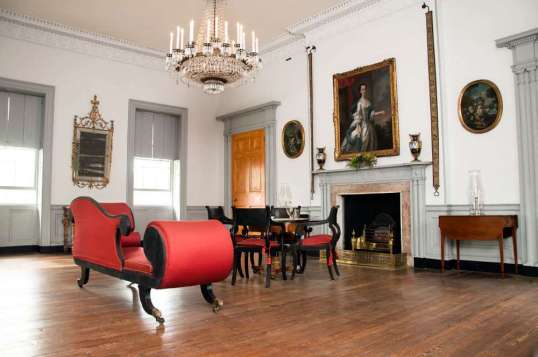
Note below the balance on the wall. A door on the right and one on the left. Pictures, tables and urns balancing each other out. The tassel on the left of the fireplace was used to call the slaves for service. The tassel to the right of the fireplace was just there for decoration.
It did nothing.
Balance!
Notice the tassels above and below.
The Drawing Room. Through the door is the Withdrawing Room. Notice the Balance.
Most homes of distinction had rooms for entertaining called Drawing Rooms. Sometimes the men would like to sneak out and smoke and talk business. They retreated to the Withdrawing Rooms.
Heyward-Washington House
Built in 1772, this Georgian-style double house was the town home of Thomas Heyward, Jr., one of four South Carolina signers of the Declaration of Independence.
A patriot leader and artillery officer with the South Carolina militia during the American Revolutionary War, Heyward was captured when the British took Charleston in 1780. He was moved to St. Augustine, Florida, with several other influential Charlestonians but was exchanged in 1781.
The City rented this house for George Washington’s use during the President’s week-long Charleston stay, in May 1791, and it has traditionally been called the “Heyward-Washington House.” The story goes many a wealthy Charlestonian wrote letters to George Washington to please stay at their house. Mr. Washington, in true politician style, could not, would not decide. So he asked the Mayor of Charleston to pick out a suitable dwelling for his week long stay.
Heyward sold the house in 1794 to John F. Grimke, also a Revolutionary War officer and father of Sarah and Angeline Grimke, the famous abolitionists and suffragettes.
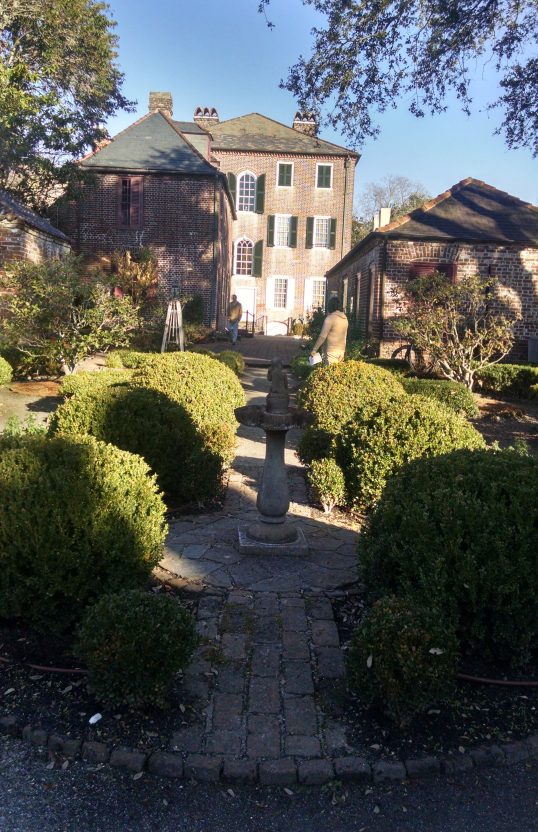
The building on the right was the water management system. The large building on the left was the kitchen on the first floor and the slave quarters on the second floor. The building on the far left, where you can only make out the tiled roof, was the ‘Necessary’ room.
Three guesses on what was necessary.
And why wasn’t it closer?
Were there no prostate issues on the 1700-1800’s?
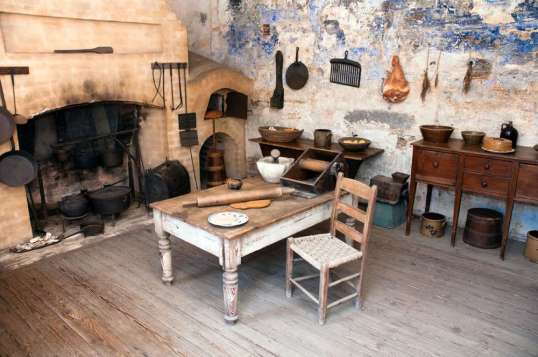
Why do you think the kitchen was not part of the main house in colonial times?
Past the Pirate Courtyard to some Ghost Tours
So now I had to take a pause. (not applause)
So these houses were bought and sold several times from their original owners over the years, how is it the furniture, paintings, etc. are legit?
Enter the phrase ‘ museum house’. These houses have been bought by the Charleston Museum and / or the Charleston Preservation Society and ‘restored‘ to what they may have looked like using family or historic documents.
For instance, the Joseph Manigualt House was bought by an Esso gas station at one point and sold gas in the front yard. The third owner of the Heyward Washington house was a baker and turned the first floor into a bakery. The floors may be original floors but the paint color “may have been” or “what we think it was” using historical data.
There were several really incredible book cases in both houses.
Most of the furniture were ‘time pieces’, maybe not from that family, but a piece of furniture from that time period. The Rice Plantation bed on Joseph Manigaults room looked too good to be 175 years old. It was a dead giveaway.
So I wondered what would a house that was not made over look like? Did these restored houses lose their original integrity?
I had my theory answered as we walked over to the Aiken Rhett House.
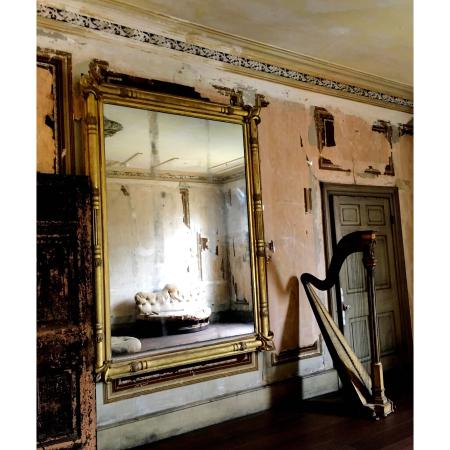
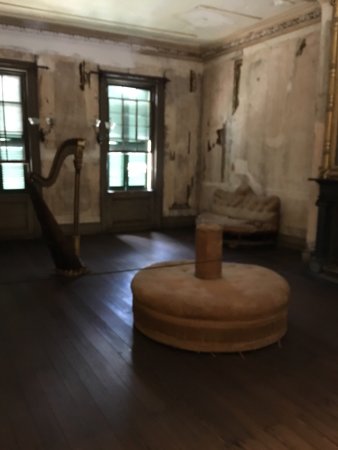
This house is termed, ‘preserved not restored.’ And I tell you, walking through the dimly lit house, with the floors squeaking and the paint peeling off the walls, it was more than a little creepy.
It reminded me of the hotel in The Shining after it had been abandoned.
I will try to go faster here with a picture tour. If interested in this history take your time and read behind the scenes or just go at your own pace to stay ahead of the tour. Please leave your audio headphones at the cashier’s desk as you leave.
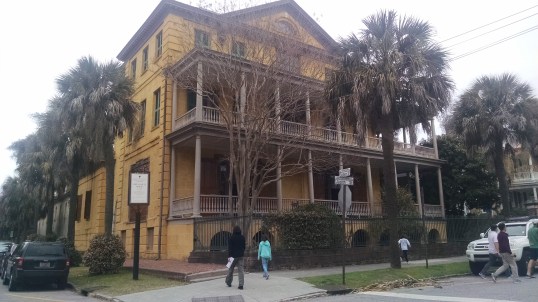
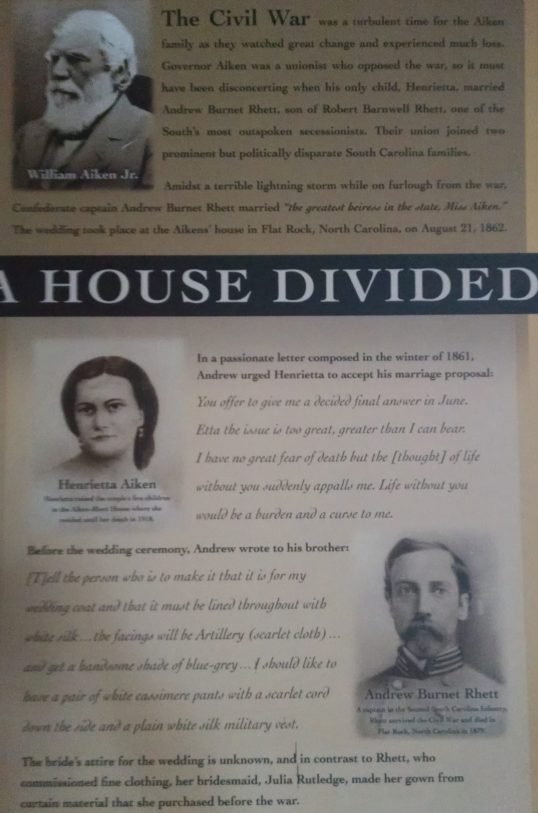
Here is why the house is called the Aiken Rhett house. And also thee Love letter. It is also known as Gov. William Aiken house.
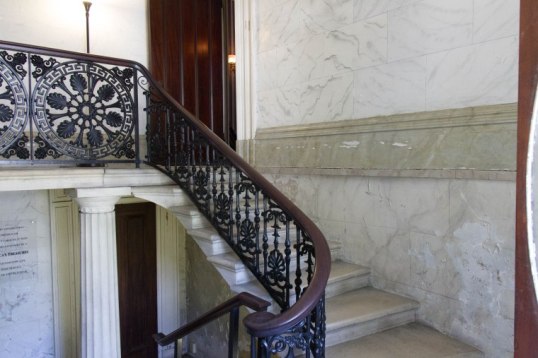
Marble stairway entrance
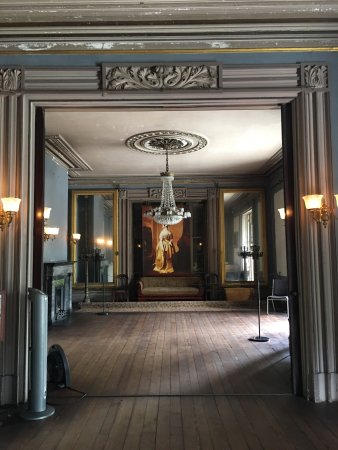
Large two room divided living room downstairs
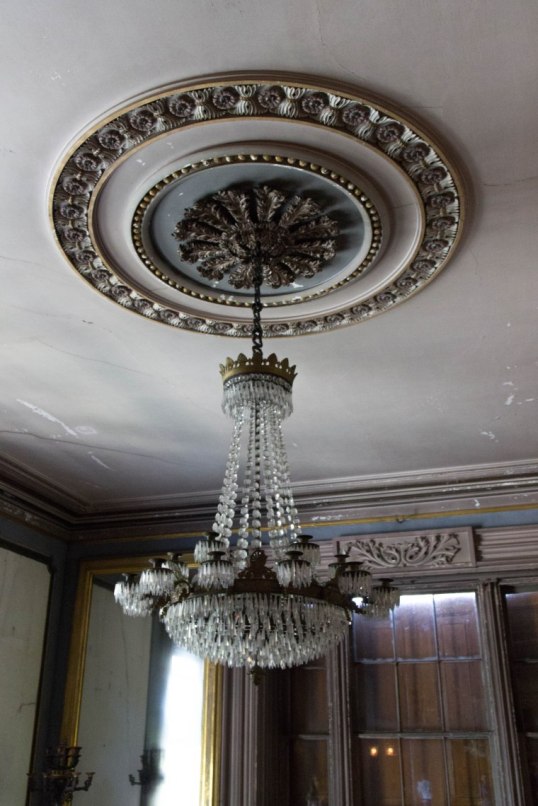
Very detailed moldings on the main living room chandelier
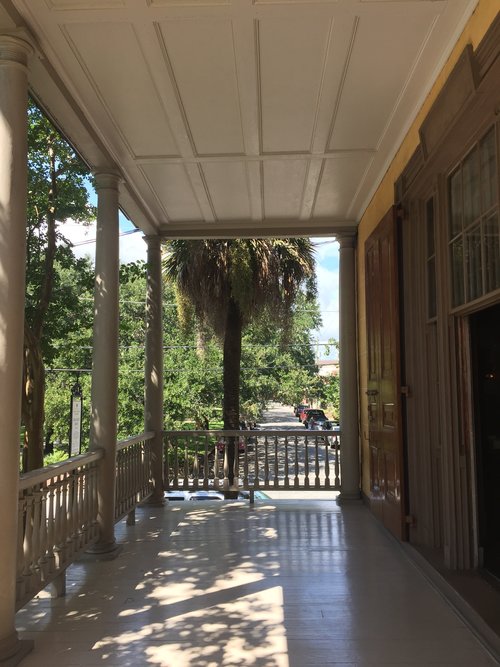
Leaving the living room, and chasing the sunlight, we went through some large open double doors onto a roomy piazza. The single hung windows (on the right border) transform into doorways that allow you to walk onto the piazza. These windows are advantageously placed to allow for a cross breeze through the house and are extremely common in the South. These roomy piazzas on three sides of the house.
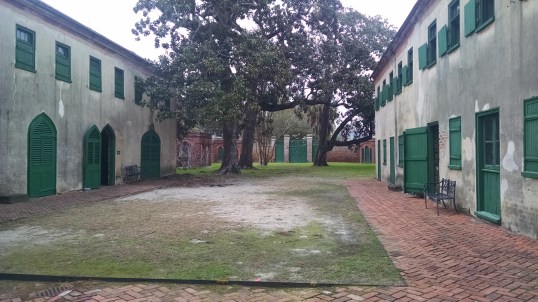
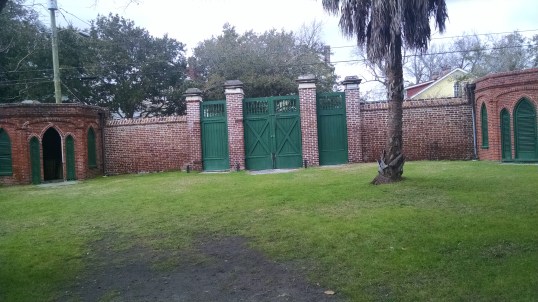
The back yard or courtyard, completely walled in.
Kitchen and Slave quarters on the right. The stables and garage on the left
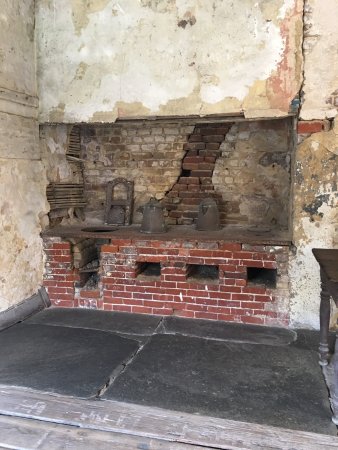
Remember the kitchen picture at the Heyward Washington house? Here is what the kitchen may have resembled had it not been ‘restored’
And this is what is left of the oven and stove
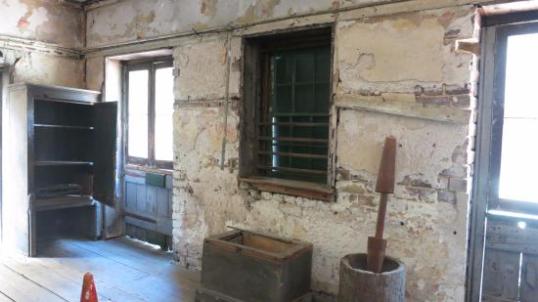
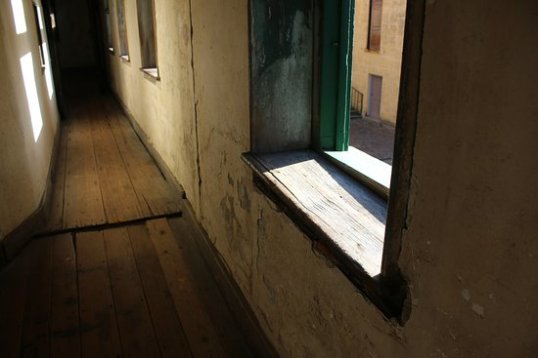
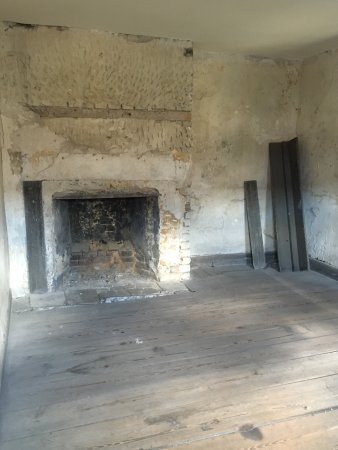
We took the worn down stairs upstairs above the kitchen to see the floor the resident slaves lived on.
There were 4 individual rooms up stairs. Each room had its own door with a lock for privacy and a window. At the end of the hall was actually a type of sitting room where the slaves could gather at the end of their day.
Going back out to the courtyard we noticed some nice trees and two Necessary Rooms (2 green doors) all the way at the end of the lot.
After viewing the stables and some very old but nice horse-drawn carriages we went back inside and to the second floor to Governor Aiken’s Drawing room.
Above is the picture in the brochure. Below is what I saw. I don’t even know if you could use the word ‘preserved’ for this room. But with the large airy room I imagine it could have been very enchanting in its time.
We toured several other rooms on the second floor including master bedrooms and bathrooms, all dimly lit with make-shift lights and electricity cords, all in disrepair. There was a small but well stocked library. And as we headed towards the end of our tour we opened the door to the only ‘restored room’ in the house, the Gallery….
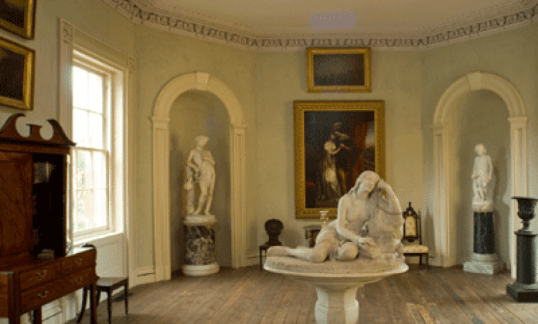
We had to open the door to the Gallery as it was the only room in the house with air conditioning. And I imagine you needed the A/C to protect these beautiful works of art..
I couldn’t even afford the frames on these paintings!
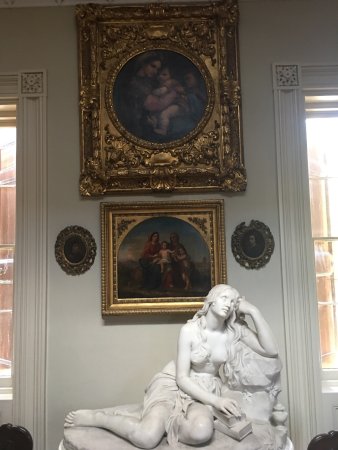
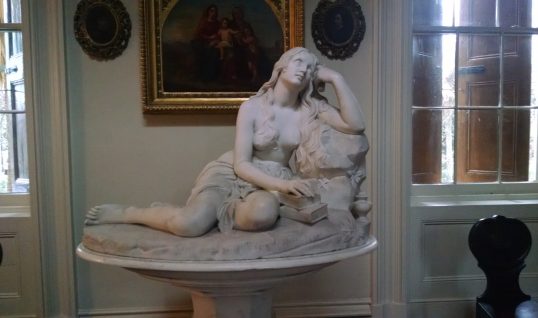
My favorite piece, of course, was the focal piece, a sculpture by Italian Domenico Menconi of Mary Magdalene, signed and dated 1858.
She has her hands on the books of the Old Testament and New Testament.
To me, it seems she is looking to heaven, dreaming, in an expression that says it all.
So that was our weekend as we toured some more landmarks where we live. It is truly magical going on holiday for a day (wish it were longer) and reliving or imagining some of the history available in Charleston.
Thanks for touring these with us! We have one more weekend to sight see.
This month we ran across something that the Charleston Visitor’s Center is putting on for locals, the Museum Mile. In January, the tourist trade is down in our town so it is a great time to be a tourist with this Museum Mile.
This promotion gives us access to participating Museum Mile sites with the purchase of one low ticket price. With the Museum Mile pass, we can spend an entire month learning about Charleston’s rich history and culture; a place we read about, and our kids learn in school, but never find the time to experience.
There are over 20 museums, museum houses, and other historical buildings to explore on this package. This past weekend we decided to tour ..
“Through our complicated history, through light and shadow, we have persevered – humanity intact. Art is the reason.”
“When the Gibbes Museum opened in 1905, the nation celebrated what Charleston has always understood: the power of art – to inspire our imagination, heal our hurt, and nourish our souls.”
(shhh…I’m getting all these sayings right off their website)
So if you are interested in taking a brief tour through a historical art collection with some pretty interesting things found in art, subjects, expressions, mediums, or stories behind the scene, read on.
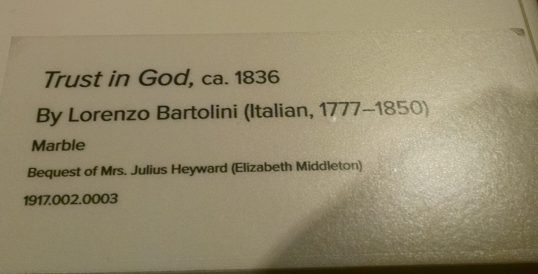
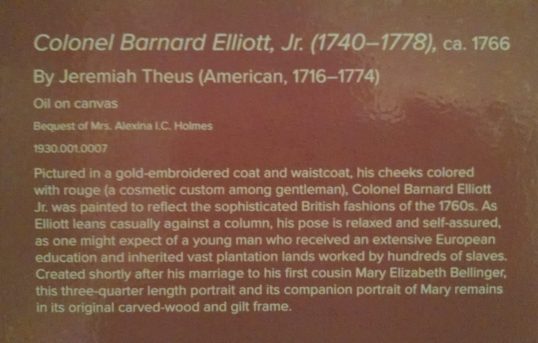
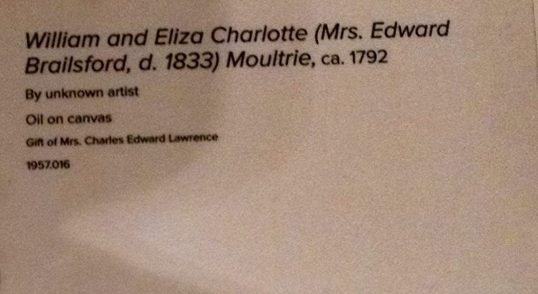
I copied some of the tags of the art work that accompanies these gems in the museum so the real story of the paintings does not get lost in translation.
So grab a chair or beverage, and lets stroll through some of the rooms of the Gibbes and see some great works of art that I found very interesting. I am sure there is something at the Gibbes for everyone.
Now I do not know much about art; maybe two things.
Art is what you like, not what others like.
Art, true art, great art, should make you think.
Like this provocative painting from the 1920’s
Does this remind you of someone? What could she be thinking about?
First thing that you might notice is….. I am not a Photographer. It seems I am listing to the right on all these pics.
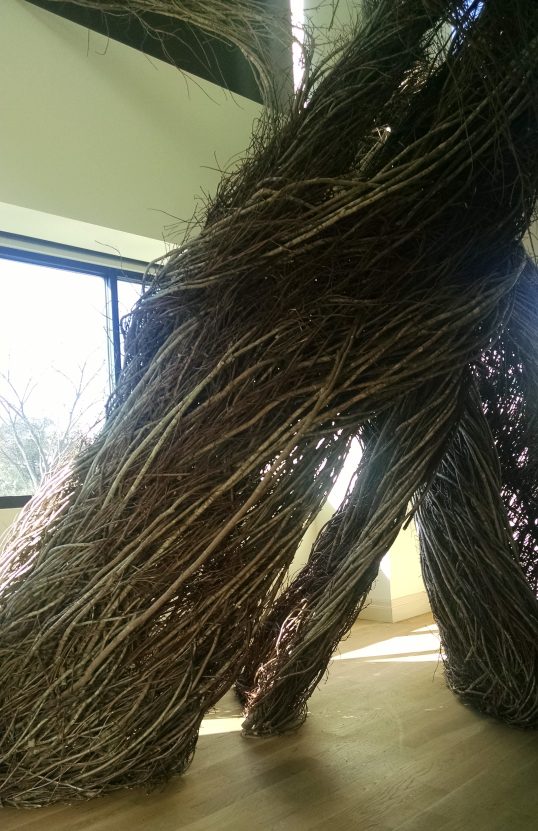
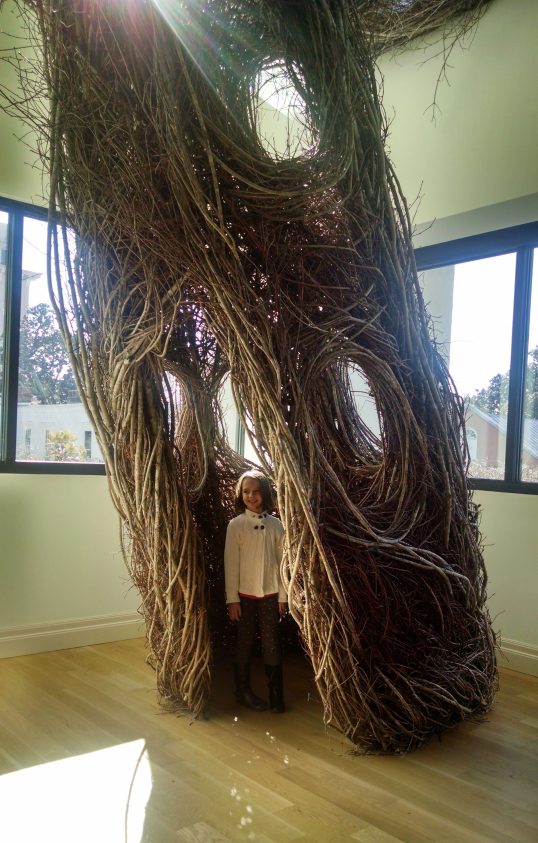
I am not sure what it makes me think of other than how did they do that and will it start to decay?
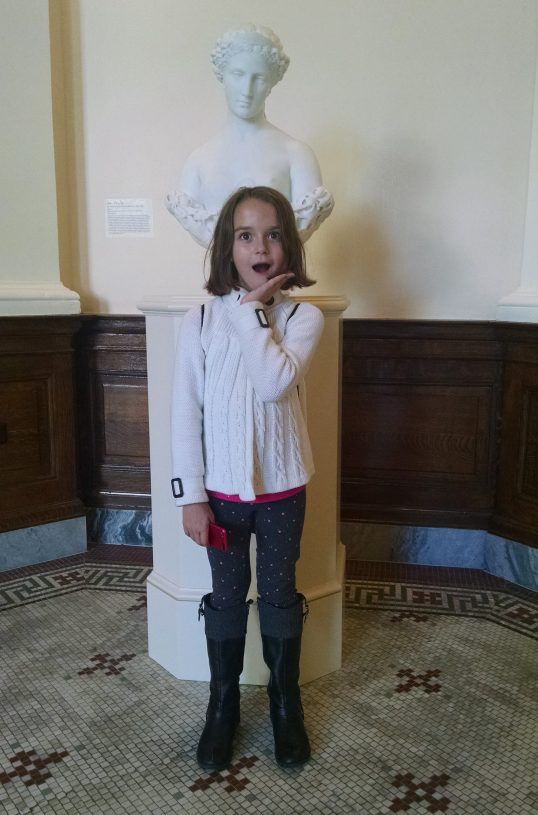
Here is my other daughter, Skylar
But there were several other exhibits besides this natural one.
SCULPTURES
I
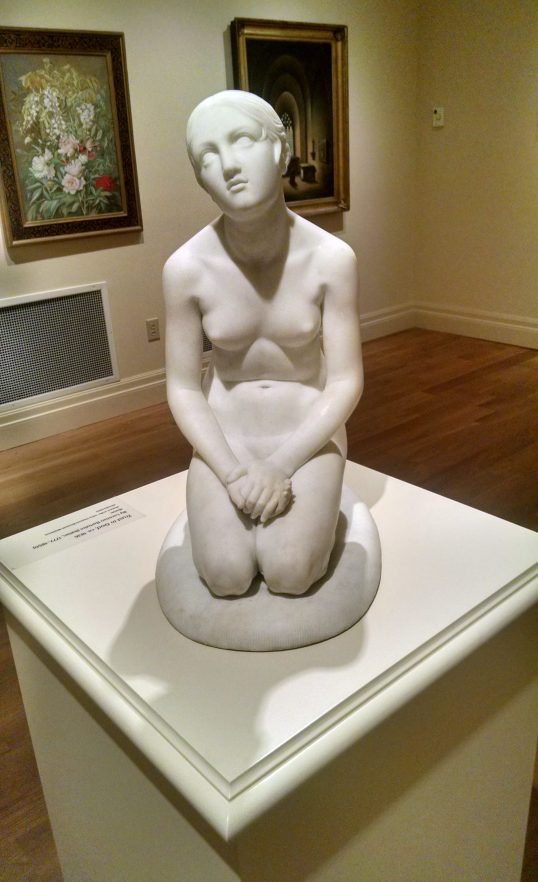
Is that an authentic facial expression or what? Have we all been there?
First, I have to tell you, it seems all good sculptors from this time period came from Italy. Many a good American sculptor went to Italy to learn their craft.
I found by the early 1800s, Neoclassicism was a style that was at its height in sculpting. American-born artists were beginning to make their mark in the art world. They traveled to Italy to learn their craft.
Wiki says, “Neoclassicism was an art style that celebrated physical characteristics in the spirit of Ancient Greek and Roman art. To 18th-century Europeans, the human figure in Greek art, with its cool, unemotional appearance, was the ideal and a means of conveying a sense of timelessness and reason.
And I think you can see that in the young lady’s expression above.
Second, it seems people in Italy at that time never button their shirts, if they have one on at all. And everyone must have bench pressed at least 250 pounds.
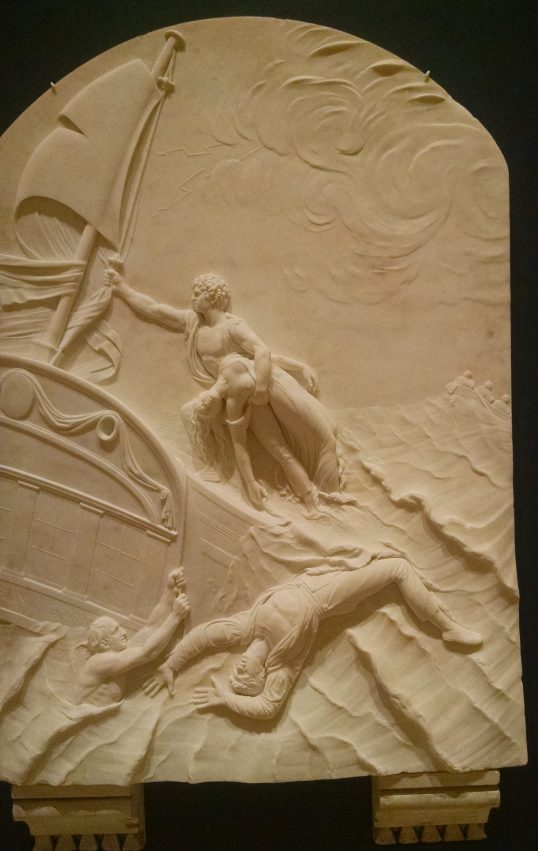
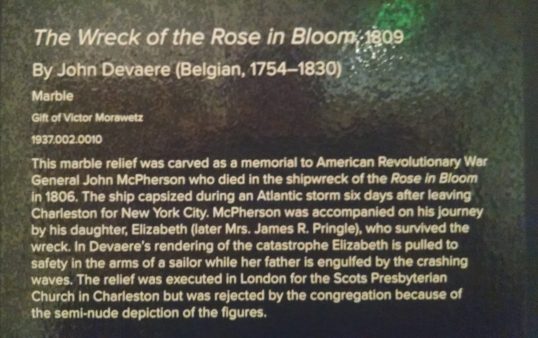
Below was my favorite piece in the whole museum..
No, not of the Edmond Fitzgerald
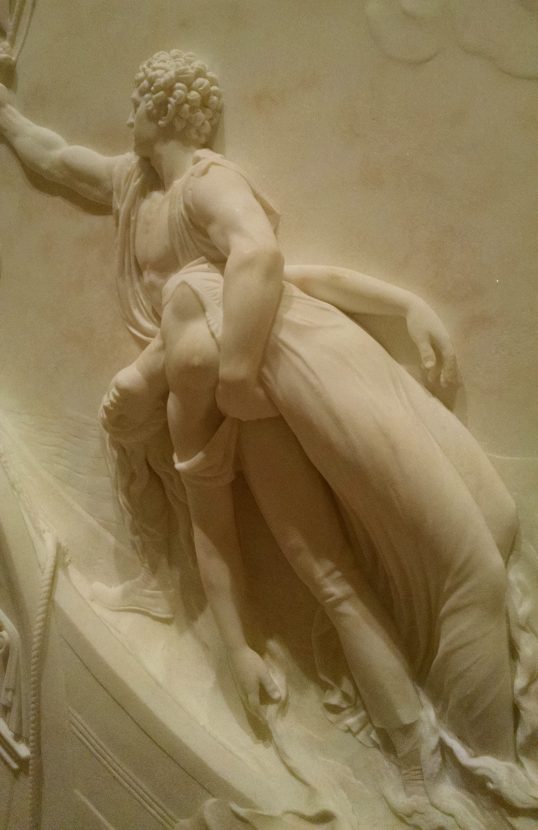
Marble again. Love the detail. Love the story
I was amazed at the detail put into carving up this block of stone. You really can’t see it below but great care was put into the man’s hair, the dangling rope, his pants and even the lines on his drooping socks to make the art look real.
Now maybe my kids didn’t find these sculptures as interesting as I. Thankfully the museum had some staff to keep a watch over them while we appreciated the art work and the stories behind them
I bet that lady was from Italy too..
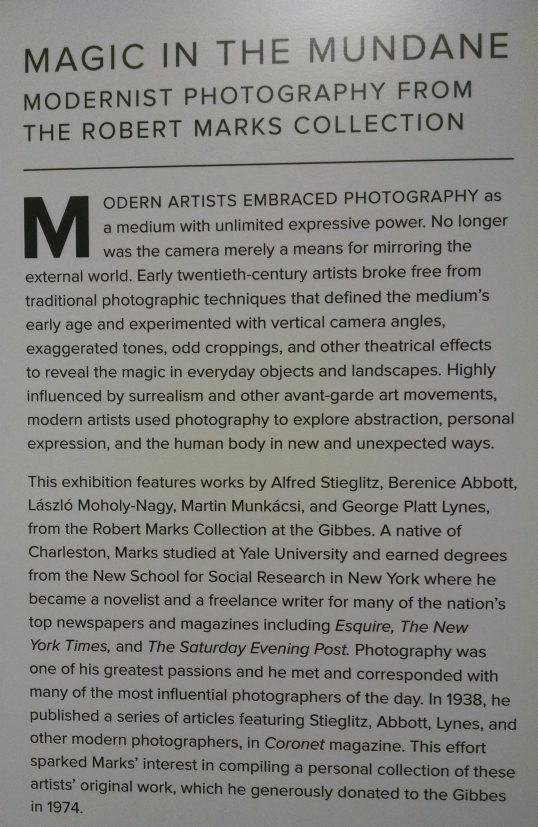
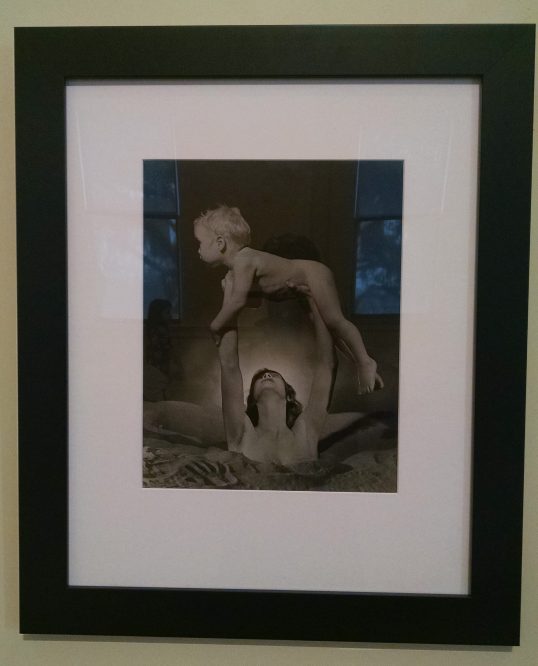
PHOTOGRAPHY
I love that,
“Magic In The Mundane“.
Does that make you think?
I would be interested in your ideas of what message the artist is trying to convey there in the Comments below. I have one or two interpretations.
Mostly, it reminds me of what great mothers do. But if you look at it, there is so much more going on in that pic, isn’t it?
Next is another, piece of art; a memory!
A memory recorded down over the ages.
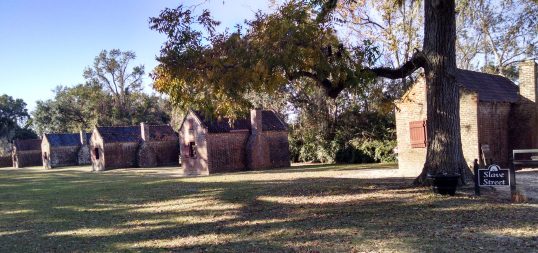
This ‘memory’ or story was sitting beside a painting of some slave shacks from the Boone Hall Plantation in Charleston.
Do you remember when I did a POST on my oldest’s field trip there two years ago?
Slave Street
Well I thought this piece of art below interesting as an example of possibly one healthy way that slaves from that time used to help endure their bondage. To me, it really makes you think.
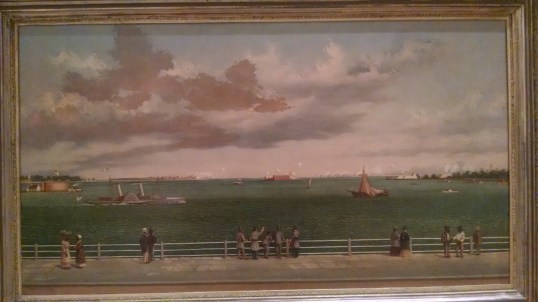
No, not talking of history like this below, although it is a good snapshot of an important moment in the US history.
‘Bombardment Of Fort Sumter, Charleston Harbor 1863‘ oil on canvas 1886 by William Aiken Walker
I mean like Historic Art that comes from the period it represents.
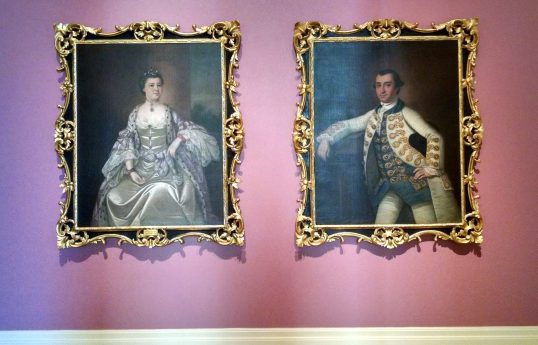
The Gibbes Museum had a series of portraits, old portraits from some Charlestonians over the years. It is not that these people were so famous or important (most were) but it is what they were wearing, their expressions that were captured, and the background that struck me.
The authentic clothes were from the time of the paintings. The looks of people were from that time. Their clothes and hair styles authentic. Their homes or decor. Anything that was in the painting would be authentic. This is how people lived in these time periods.
Take a look at these dates on these paintings. They are legit museum pieces of art.
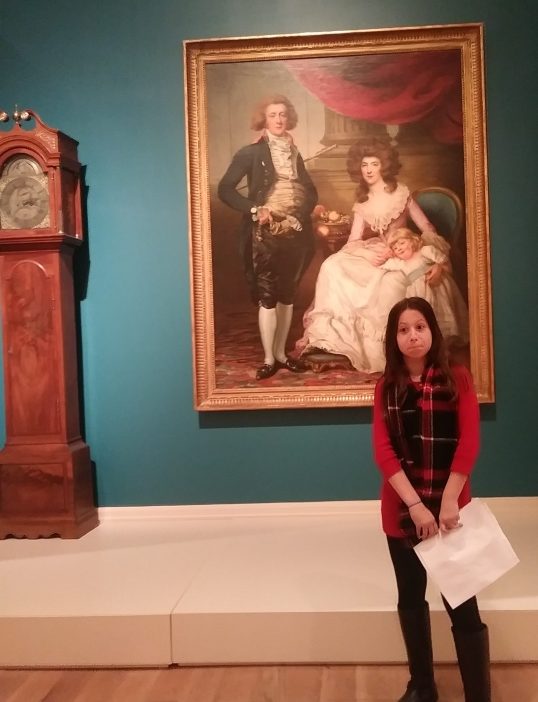
So this was an American born young man wearing British style attire. Did you catch that?
The date shows before the revolutionary war when the Carolinas had their ‘Governors’ appointed by the King at that time. Also I see he married his cousin. That’s one way to keep the money in the family.
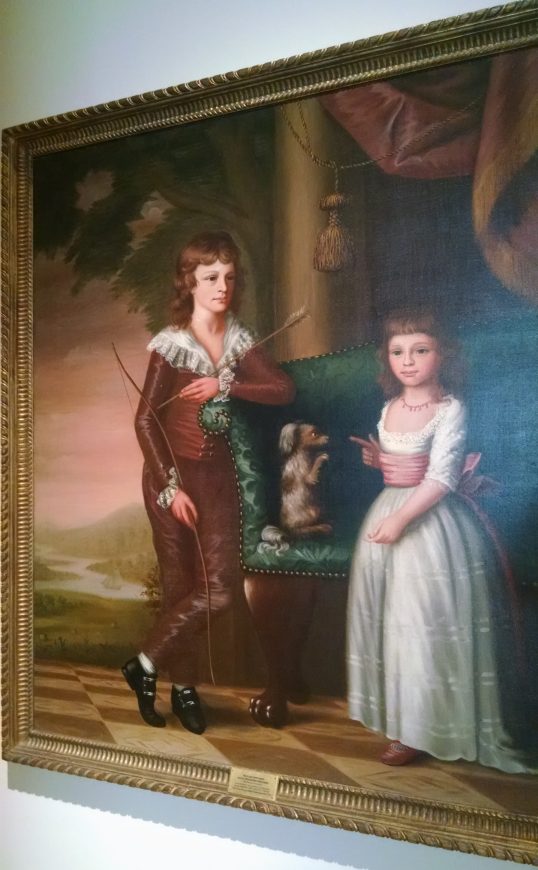
Was that a toy bow and arrow? Or a real one?
Remember the old Christmas Carol, Up On The House Top, where a boy dreams of
” Here is a hammer and lots of tacks.
Also a ball and a whip that cracks.”
That Christmas classic was written circa 1857.
In one picture of some kids from the 1800’s in the museum there was a young boy holding a little whip with a kinked knot or two on the end of the rope.
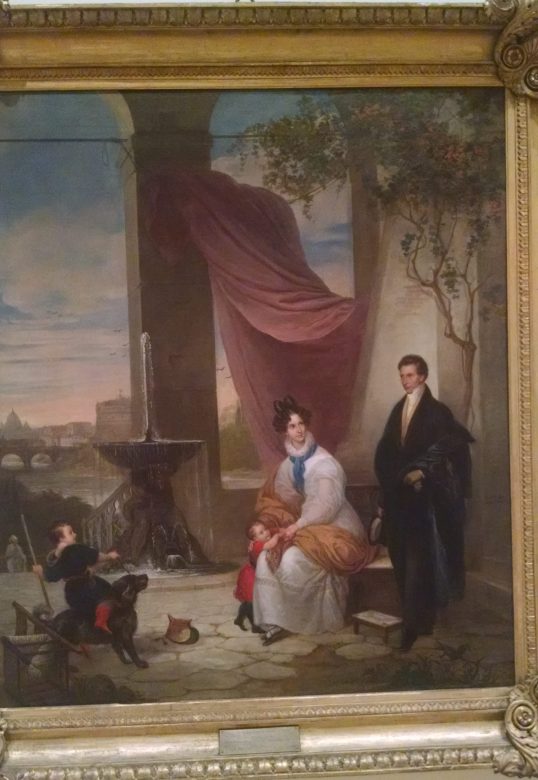
And finally I thought, and found out, this a particularly interesting one:
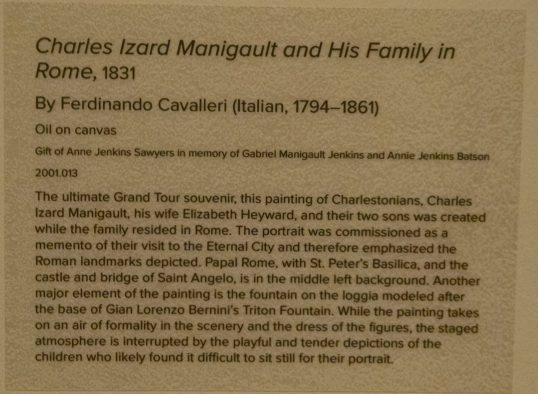
Two very big names in early Charleston, Manigault and Heyward
In this painting the family Manigault was vacationing in Rome. There were no cameras or cell phones of course. So the happy family just had to have someone paint a picture of them to capture the memories and bring them home. Tough life.
Beside this painting in the museum was a portrait of Mr. Maniqualt that was captured ‘in Philadelphia on his way to a 6 year trip to China.’
I can’t even imagine this type of life. A 6 year trip to China in the mid 1800’s? What would he use for currency?
His Grandfather, Peter Manigault was the wealthiest person in the British North American colonies (Wiki says), He practiced law, became a successful merchant and banker, and managed his family’s over 200 slaves and extensive plantation holdings. His net worth of approximately £33,000 in 1770 is equal to approximately $4 million in 2016.[5]
Think about that for a second.
If it cost about $26 to build a house back then, how much was $4 million worth?
And so, as I thought, I realized this most be art. A painting on the wall that makes Magic from the mundane.
So what about you? What types of art do you like?
Enjoy your own art this week and weekend.
I hope you make some of your own!
“We believe art is the difference between merely existing and being truly alive.”






 Why do you think the kitchen was not part of the main house in colonial times?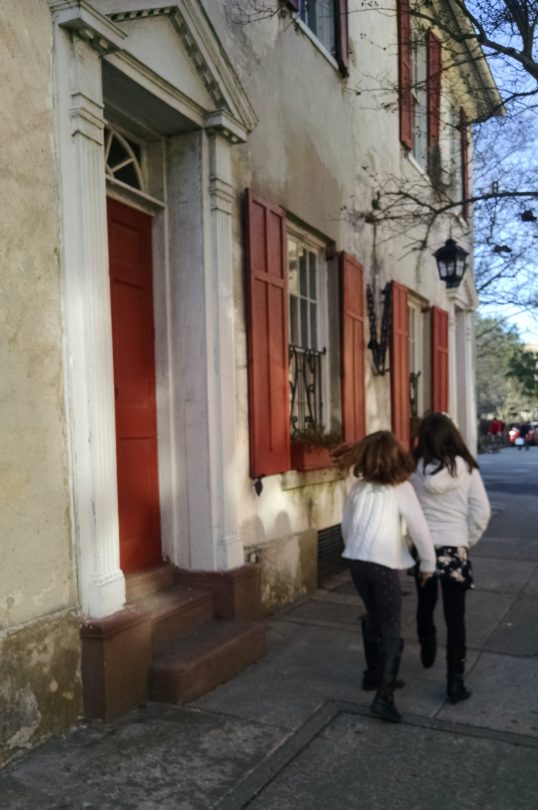




 OUR LIFE IN 3D